
Cough, cold and fever are usually mild and clear up on their own – but a few warning signs mean you should see a doctor. This guide explains what is normal, when to rest at home, and the red flags for cough, cold and fever in adults and children, based on trusted medical sources.
Last updated: 9 June 2026.
Key takeaways
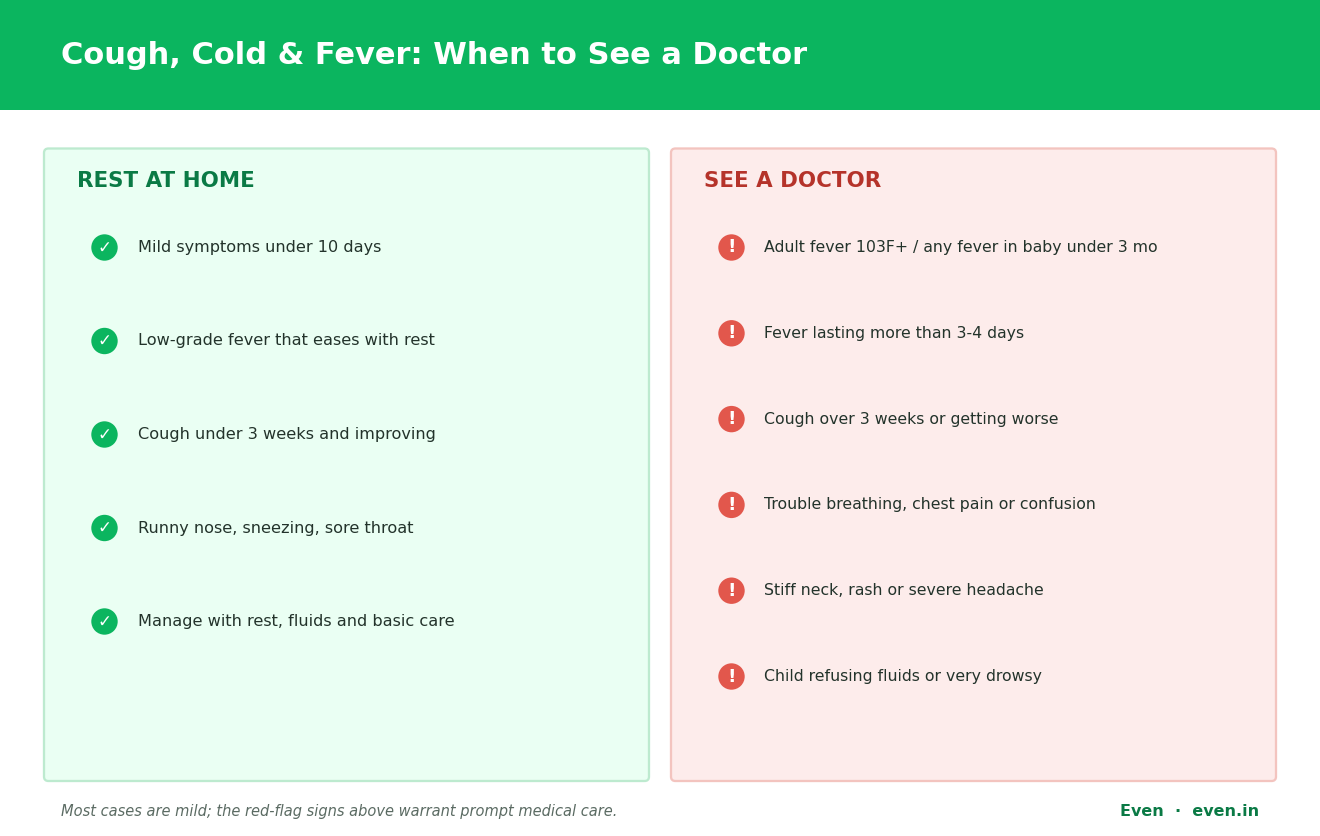
- Most cough, cold and fever clears up in 7-10 days with rest, fluids and basic care.
- A cough can linger 1-3 weeks; see a doctor if it lasts longer, worsens, or comes with breathlessness or chest pain.
- Red-flag fever: 103°F (39.4°C) in adults, any fever in babies under 3 months, or fever lasting more than 3-4 days.
- Colds build slowly and stay mild; flu hits suddenly with high fever, body aches and deep fatigue.
- Seek urgent care for trouble breathing, chest pain, confusion, stiff neck, or a child who will not drink fluids.
Cold vs flu: what is the difference?
Both are viral illnesses affecting the nose, throat and lungs, but the flu tends to hit harder and faster. If you feel severe from day one, treat it as flu: rest, hydrate and monitor your fever closely.
| Feature | Cold | Flu |
|---|---|---|
| Onset | Gradual | Sudden |
| Fever | Low-grade or none | High (often 102°F+) |
| Body aches | Mild | Common, often severe |
| Fatigue | Mild | Intense, can last days |
| Main symptoms | Runny nose, sneezing, sore throat | Fever, chills, aches, harsh cough |
Cough: when to be concerned
A cough from a cold or allergies usually settles within 1-3 weeks. See a doctor if your cough:
- Lasts more than 3 weeks or gets worse instead of improving
- Produces green or yellow mucus for many days
- Comes with shortness of breath, wheezing, chest pain, fainting or weight loss
If you smoke, have asthma or COPD, or are exposed to dust and chemicals, your risk of complications is higher – do not wait too long for a review.
Cold symptoms: when it is more than a cold
Most colds last 7-10 days. Call a doctor if you notice:
- Symptoms lasting beyond 10 days
- Fever above 101.3°F (38.5°C) for more than 3 days
- Severe ear pain or fluid from the ear
- Facial pressure or tooth pain with coloured nasal discharge
- Breathing trouble or wheezing
For children: any fever in a baby under 3 months needs immediate medical attention. In older kids, watch for high fever, refusal to eat or drink, or unusual drowsiness.
Fever: normal vs worrying
A mild fever helps your body fight infection, but a very high or persistent fever should not be ignored. Seek urgent care if:
- Fever is 103°F (39.4°C) or higher in adults
- Fever is any level in babies under 3 months
- Fever lasts more than 3-4 days
- Fever comes with rash, stiff neck, confusion, chest pain or severe headache
Possible complications
Most cases are harmless, but cough, cold and fever can sometimes lead to ear infections (common in children), sinus infections, bronchitis or pneumonia, and asthma flare-ups. Get checked if symptoms suddenly worsen after initial improvement.
When to see a doctor: quick checklist
- Symptoms last longer than 10 days
- Fever is very high or lasts more than 3-4 days
- The cough lasts more than 3 weeks
- Trouble breathing, chest pain or confusion
- A child has a persistent high fever or refuses fluids
If you would rather check with a doctor quickly, a free online doctor consultation is an easy first step.
How to prevent cough, cold and fever
- Wash your hands often with soap and water
- Cover coughs and sneezes with a tissue or your elbow
- Avoid sharing utensils and cups when sick
- Clean frequently touched surfaces
- Support immunity: eat well (including vitamin-C-rich foods), exercise, and get enough quality sleep
Frequently Asked Questions
A cold typically lasts 7-10 days, a cough can linger 1-3 weeks, and most fevers settle within 3-4 days. Symptoms beyond these windows, or that worsen, warrant a doctor’s visit.
Seek urgent care if an adult’s fever reaches 103F (39.4C), any fever in a baby under 3 months, fever lasting more than 3-4 days, or fever with rash, stiff neck, confusion, chest pain or severe headache.
Colds come on slowly with mild symptoms like a runny nose and sore throat. Flu hits suddenly with high fever, body aches, chills and deep fatigue. If you feel severe from day one, treat it as flu.
See a doctor if a cough lasts more than 3 weeks, worsens, brings up green or yellow mucus for days, or comes with breathlessness, wheezing, chest pain or weight loss.
If symptoms last beyond 10 days, the fever is very high or lasts 3-4+ days, a cough lasts over 3 weeks, you have breathing trouble, chest pain or confusion, or a child has a persistent high fever or will not drink fluids.
Wash hands often, cover coughs and sneezes, avoid sharing utensils when sick, clean shared surfaces, and support immunity with good food, exercise and sleep.
Yes. The viruses spread through droplets and contact. Stay home when sick, cover coughs, and wash hands often to avoid spreading them.
The bottom line
Most cough, cold and fever can be managed at home with rest, fluids and basic care – but do not ignore symptoms that are severe, persistent or unusual. Getting medical advice early helps prevent complications and speeds recovery. Explore more in our Health section.
Not sure whether to see a doctor? You can consult a doctor at an Even clinic in Bangalore, and health insurance that covers consultations and diagnostics keeps the costs predictable.
Related reading
- Free online doctor consultation
- Why annual health check-ups matter
- Why your sleep is not as restful anymore
- Water apple: a vitamin-C-rich fruit
- More from the Even Health blog
Sources
Guidance in this article is based on widely accepted clinical sources, including the U.S. Centers for Disease Control and Prevention (CDC) and Mayo Clinic patient guidance on colds, influenza and fever.
References
- U.S. Centers for Disease Control and Prevention (CDC) – common cold and flu.
- Mayo Clinic – cold, flu and fever symptoms and care.
- NHS – cough, cold and fever guidance.