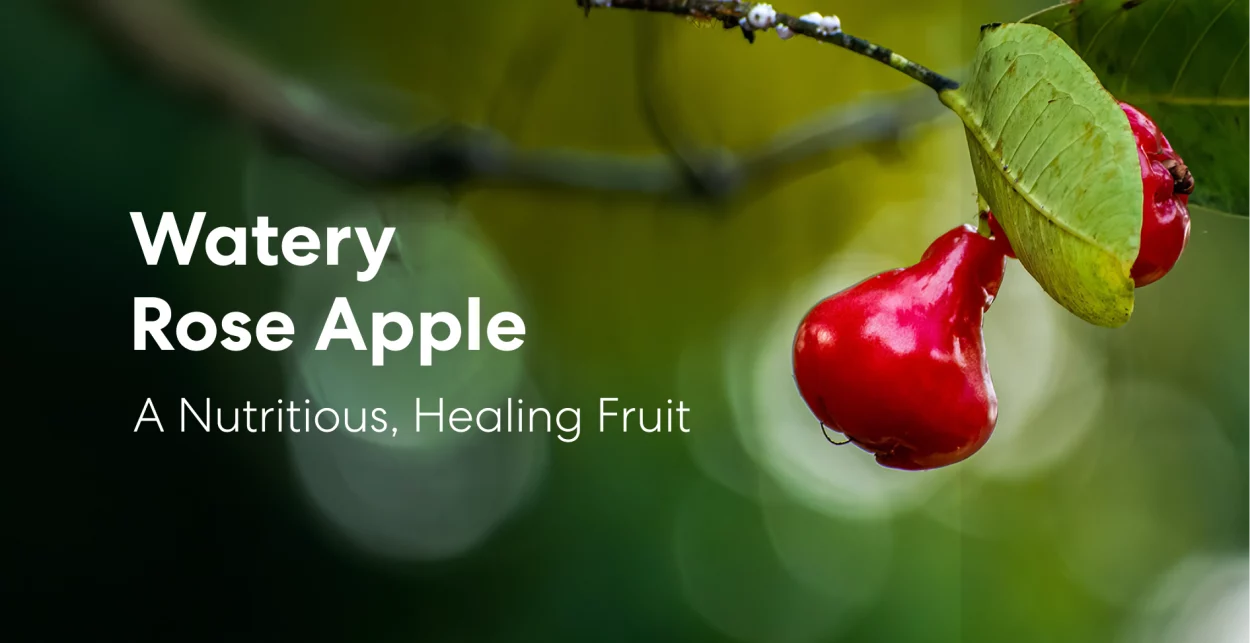
Syzygium aqueum, popularly known as Watery Rose Apple, Water Apple, or Jamrul, is a tropical fruit widely valued in Indian, Southeast Asian, and Polynesian traditional medicine. Recent scientific reviews and nutritional studies highlight the rich plant compounds profile, anti-inflammatory activity, and wide-ranging health benefits of Syzygium aqueum, making it an emerging functional food and nutraceutical candidate.
1. Phytochemical Richness Supporting Overall Health
Studies show that Syzygium aqueum contains a diverse range of bioactive compounds, including flavonoids, tannins, anthocyanins, terpenoids, phenolic acids, essential oils, vitamins, and minerals (Darade et al., 2024; Yassir et al., 2022). These plant compounds act synergistically to provide antioxidant, germ-fighting and anti-inflammatory effects.
Nutritional analyses further highlight the fruit’s richness in vitamin C, dietary fiber, and hydrating electrolytes, making it particularly beneficial for consumption in tropical and hot climates (Sonawane, 2022).
2. Strong Anti-Inflammatory and Antioxidant Properties
One of the most consistently reported health benefits of Syzygium aqueum is its strong anti-inflammatory potential. Polyphenols and hydrolysable tannins help regulate inflammatory pathways and reduce oxidative stress, which may benefit individuals with metabolic disorders and chronic inflammatory conditions (Yassir et al., 2022).
Although the 2022 review was retracted in 2024, the core findings related to antioxidant-rich phytochemistry remain supported by other independent studies.
3. Digestive and Metabolic Health Benefits
Research indicates that the high fiber content of watery rose apple supports digestive health by improving bowel regularity and gut comfort (Sonawane, 2022). Its low-calorie and low-glycemic profile makes Syzygium aqueum suitable for individuals focused on weight management and blood sugar control.
Some studies also suggest that its antioxidants may help reduce post-meal glucose spikes by modulating metabolic pathways (Banadka et al., 2022).
4. Cardiovascular and Lipid-Lowering Potential
Scientific reviews highlight the promising role of Syzygium aqueum in cardiovascular health. The fruit’s phenolic compounds and flavonoids contribute to:
- Improved lipid metabolism
- Reduced oxidative stress in blood vessels
- Potential lowering of LDL cholesterol
- Enhanced vascular relaxation
(Banadka et al., 2022)
These properties position watery rose apple as a preventive nutritional fruit for heart health.
5. Antimicrobial and Protective Effects
Several studies document the germ-fighting activity of Syzygium aqueum fruit, leaves, and bark, particularly against bacterial and fungal strains associated with foodborne illnesses (Darade et al., 2024). Plant extracts have demonstrated potential applications in natural preservatives, herbal medicines, and functional food formulations.
6. Economic, Agricultural, and Community Importance
Beyond its medicinal value, Syzygium species, including S. aqueum and S. samarangense, play a vital role in local economies, home gardens, and small-scale farming systems (Banadka et al., 2022). Their low maintenance requirements, climate adaptability, and high fruit yield make them valuable for sustainable agriculture and community nutrition initiatives.
7. Additional Health Benefits Reported in Scientific Literature
The reviewed studies also highlight that:
- The fruit’s high water content supports hydration in hot climates
- Leaf extracts show efficacy against skin inflammation and infections (Darade et al., 2024)
- Bioactive compounds may assist in liver protection and detoxification
- Seeds and bark are traditionally used to treat diarrhea and skin ailments
- The plant shows strong potential for nutraceutical and functional food development (Sonawane, 2022)
- Syzygium fruits contribute significantly to food security and rural livelihoods across Asia (Banadka et al., 2022)
Conclusion around Syzygium aqueum health benefits
In conclusion, Syzygium aqueum (watery rose apple) stands out as a scientifically supported tropical fruit with significant nutritional and healing potential. Its rich plant compounds profile, antioxidant and anti-inflammatory properties, and benefits for digestive, metabolic, and cardiovascular health highlight its value in preventive nutrition and traditional medicine. As awareness of food-based wellness grows, integrating such nutrient-dense fruits into daily diets can complement broader healthcare approaches. Platforms like Even Healthcare, which focus on preventive care and health management, and clinical ecosystems such as Even Hospitals, that emphasize evidence-based medical services, reflect the growing importance of combining nutrition, lifestyle, and accessible healthcare for long-term well-being.
References
- Darade, R. R., et al. (2024). A Review on Various Parts of Herbarium Syzygium aqueum. International Journal of Novel Research and Development, 9(7), ISSN 2456-4184.
- Yassir, M., et al. (2022). Watery Rose Apple: A Comprehensive Review… Oxidative Medicine and Cellular Longevity, 2022:7502185. (Retracted 2024:9834349)
- Sonawane, M. S. (2022). Dietary Benefits of Watery Rose Apple (Syzygium aqueum). YCMOU, Nashik.
- Banadka, A., et al. (2022). The Role of Syzygium samarangense in Nutrition and Economy. South African Journal of Botany. https://doi.org/10.1016/j.sajb.2022.03.014