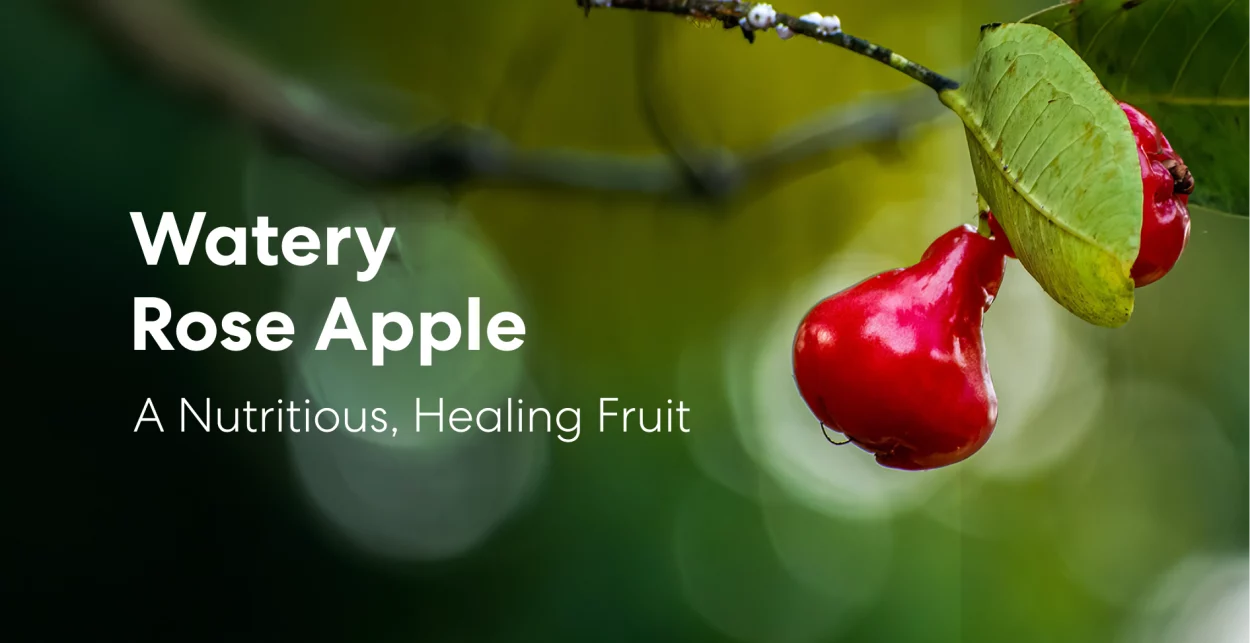
Water apple benefits, explained: the water apple – also called jamrul, rose apple or java apple (Syzygium aqueum) – is a crisp, hydrating tropical fruit rich in vitamin C, fibre and antioxidants. It is very low in calories and supports hydration, digestion, blood sugar and heart health. Here is the nutrition, the key benefits, how to eat it, and any side effects.
Reviewed by Dr. Kamar Afshan, Clinical Nutritionist. Last updated: 9 June 2026.
Key takeaways: water apple benefits
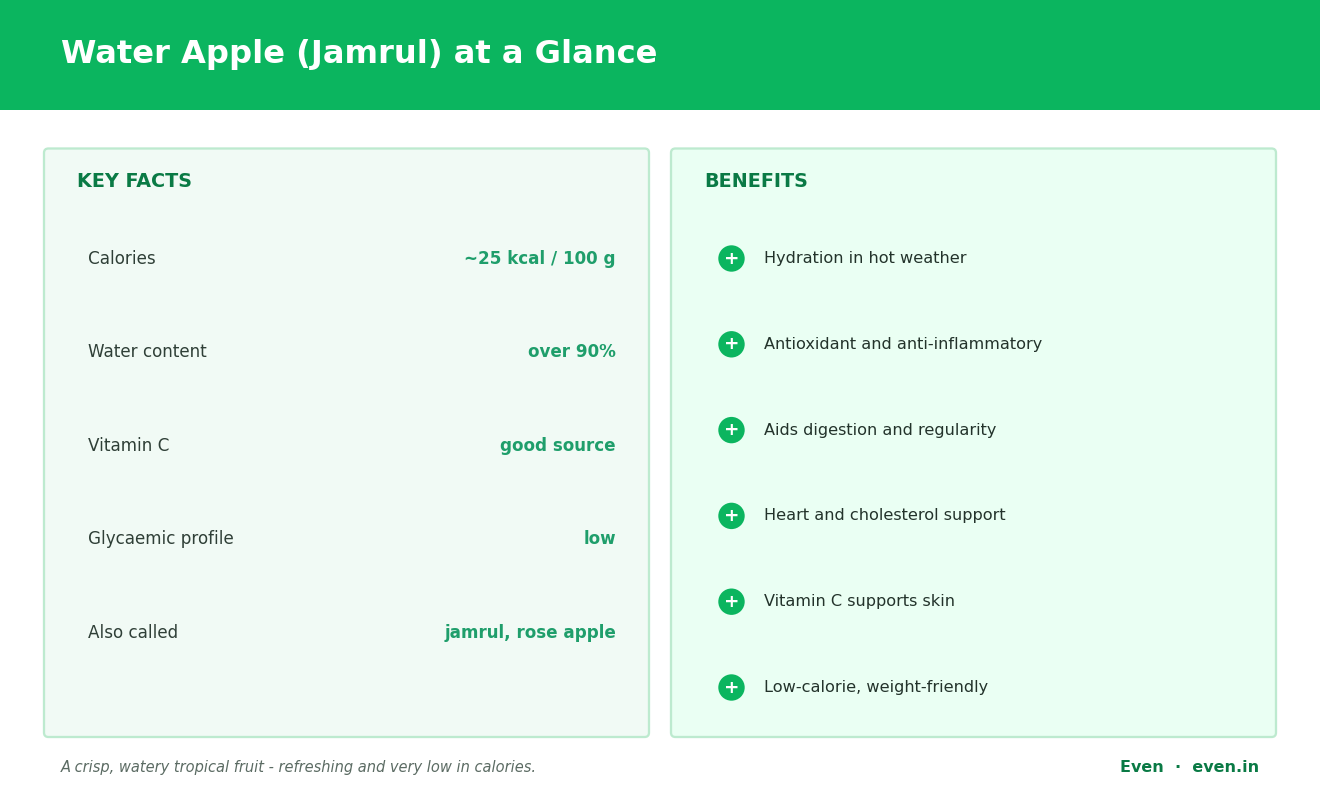
- Very low calorie and hydrating: about 25 kcal per 100 g and over 90% water – great for hot climates and weight management.
- Rich in vitamin C and antioxidants (flavonoids, tannins, anthocyanins) that fight inflammation and oxidative stress.
- Supports digestion with fibre that aids regularity and gut comfort.
- Heart- and blood-sugar-friendly: low glycaemic profile and compounds that support healthy lipids.
- Known across India as jamrul, and elsewhere as rose apple, java apple or watery rose apple.
Water apple (jamrul) nutrition
| Nutrient (per 100 g) | Amount |
|---|---|
| Calories | ~25 kcal |
| Water | ~90-93% |
| Carbohydrate | ~5.7 g |
| Dietary fibre | Present (supports digestion) |
| Vitamin C | Good source |
| Minerals | Calcium, potassium, small amounts of iron |
Health benefits of water apple
1. Hydration and low-calorie nutrition
With over 90% water and very few calories, water apple is a refreshing way to stay hydrated in hot weather while supporting weight management.
2. Antioxidant and anti-inflammatory protection
Polyphenols and tannins help regulate inflammation and reduce oxidative stress, which may benefit people with metabolic or chronic inflammatory conditions. For more antioxidant-rich fruit, see black grapes and mulberries.
3. Digestive and gut health
Its fibre improves bowel regularity and gut comfort, and its low-calorie, low-glycaemic profile suits weight and blood sugar management.
4. Blood sugar and metabolic support
Antioxidants may help blunt post-meal glucose spikes, making water apple a sensible fruit for those managing blood sugar.
5. Heart and cholesterol health
Phenolic compounds and flavonoids support healthy lipid metabolism, reduce oxidative stress in blood vessels, and may help lower LDL cholesterol. Pair it with other heart-friendly foods like hazelnuts.
6. Skin benefits
Vitamin C and antioxidants support collagen and protect skin from oxidative damage, and leaf extracts are traditionally used to soothe skin inflammation.
How to eat water apple
- Eat it fresh and whole, skin on, after washing well.
- Slice into fruit or vegetable salads for crunch.
- Blend into juices or infused water for a hydrating drink.
- Choose firm, glossy, ripe fruit; it is mildly sweet and very watery.
Water apple side effects and precautions
Water apple is very safe for most people. A few sensible precautions:
- Eating large amounts may cause mild bloating from its fibre and water content.
- Wash thoroughly and eat ripe fruit to avoid stomach upset.
- As with any fruit, those with specific allergies should introduce it cautiously.
Frequently Asked Questions
Jamrul, or water apple, is hydrating, very low in calories, and rich in vitamin C, fibre and antioxidants, supporting digestion, blood sugar control, heart health and skin.
Yes. At about 25 kcal per 100 g with high water and fibre, water apple is filling and very low in calories, making it a good choice for weight management.
It has a low glycaemic profile and antioxidants that may help blunt post-meal glucose, so it is a sensible fruit in moderation for people managing blood sugar.
Its vitamin C and antioxidants support collagen and protect against oxidative damage, and leaf extracts are traditionally used to soothe skin inflammation.
Water apple is very safe. Eating large amounts may cause mild bloating from fibre and water; wash well and eat ripe fruit to avoid stomach upset.
Eat it fresh and whole with the skin on, slice it into salads, or blend it into juices and infused water. It is crisp, mildly sweet and very watery.
It is commonly called jamrul (Bengali), and also rose apple, java apple or watery rose apple; botanically Syzygium aqueum or Syzygium samarangense.
The bottom line
Water apple (jamrul) is a hydrating, low-calorie fruit with vitamin C, fibre and antioxidants that support digestion, blood sugar, heart health and skin. Enjoyed fresh as part of a varied diet, the water apple benefits make it a smart, refreshing choice. Explore more in our Health section.
For nutrition and care tailored to you, Even offers cashless health insurance and in-person treatment at Even Hospital, a multispecialty hospital in Bangalore.
Related reading
- Mulberry benefits and side effects
- Black grapes during pregnancy: benefits and safety
- Hazelnuts: heart and metabolic health
- Green moong dal: benefits and protein
- More from the Even Health blog
References
- Darade, R. R., et al. (2024). A Review on Various Parts of Syzygium aqueum. International Journal of Novel Research and Development, 9(7).
- Sonawane, M. S. (2022). Dietary Benefits of Watery Rose Apple (Syzygium aqueum). YCMOU, Nashik.
- Banadka, A., et al. (2022). The Role of Syzygium samarangense in Nutrition and Economy. South African Journal of Botany.