

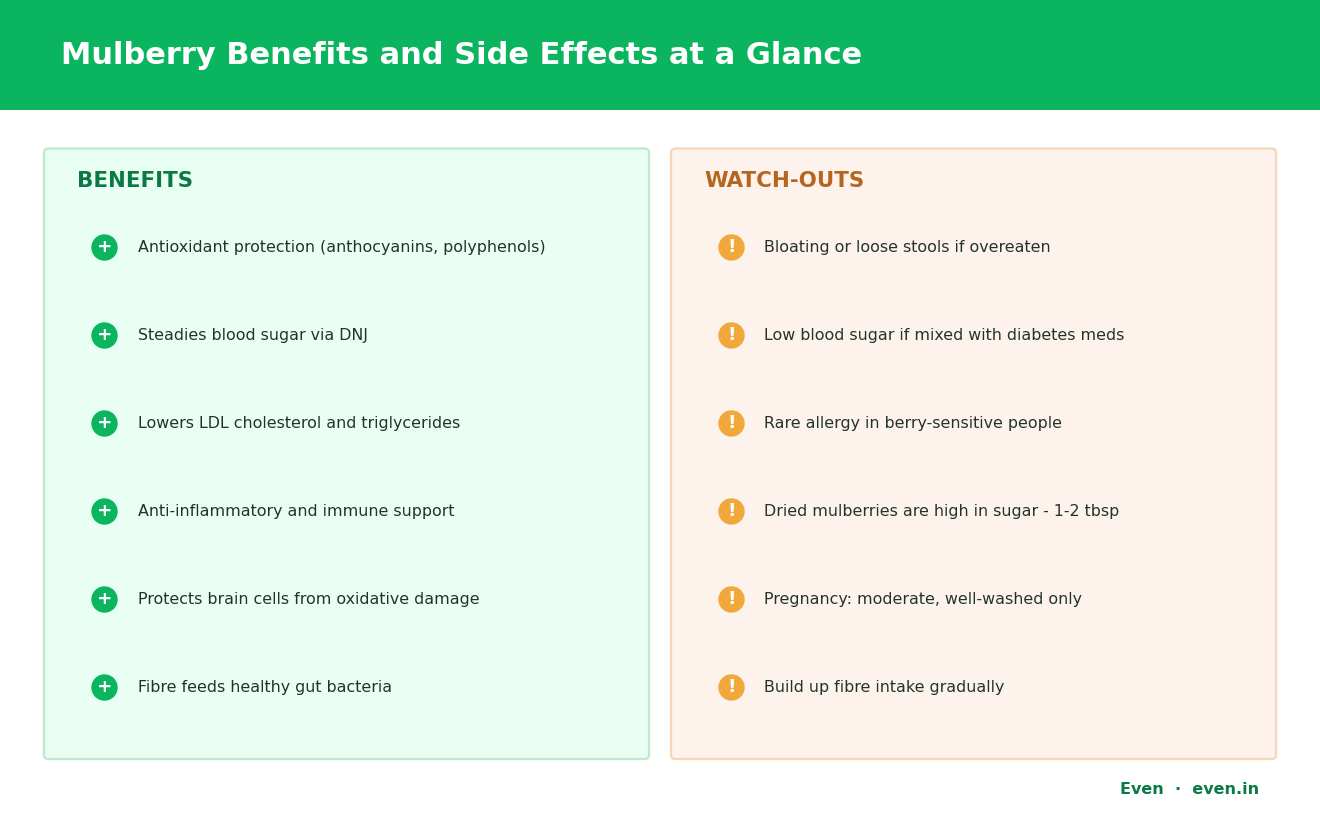
Mulberry benefits and side effects, in one place: mulberries (Morus spp.) are loaded with antioxidants and a natural compound called DNJ that helps steady blood sugar, support heart health, and protect cells from damage. Eaten sensibly they are very safe, but overeating can cause mild digestive upset or push blood sugar low if you take diabetes medication. Here is the evidence-based guide, including how much to eat and who should be cautious.
Reviewed by Dr. Kamar Afshan, Clinical Nutritionist. Last updated: 9 June 2026.
Key takeaways: mulberry benefits and side effects
- Mulberries are rich in anthocyanins, polyphenols and fibre, plus DNJ (1-deoxynojirimycin), a compound that slows carbohydrate digestion.
- Best-supported benefits: antioxidant protection, steadier blood sugar, better cholesterol, and gut health.
- A sensible portion is a small handful of fresh mulberries (about 80-100 g) or 1-2 tablespoons dried.
- Side effects are usually mild: bloating or loose stools from fibre, and a small risk of low blood sugar if combined with diabetes medication.
- People on blood-sugar-lowering drugs, anyone with a berry allergy, and pregnant women (in excess) should be cautious.
What makes mulberry so nutritious?
Mulberry is a functional food: it delivers benefits beyond basic nutrition thanks to a dense mix of bioactive compounds.
- Anthocyanins and flavonoids – the antioxidants behind its deep colour
- Phenolic acids – anti-inflammatory plant compounds
- Dietary fibre – supports digestion and fullness
- Vitamin C, iron, potassium and vitamin K
- 1-Deoxynojirimycin (DNJ) – a natural blood-sugar-modulating compound fairly unique to mulberry
| Nutrient (per 100 g, fresh) | Amount |
|---|---|
| Calories | ~43 kcal |
| Carbohydrate | ~9.8 g |
| Fibre | ~1.7 g |
| Protein | ~1.4 g |
| Vitamin C | ~36 mg (about 40% of daily need) |
| Iron | ~1.85 mg |
Health benefits of mulberry, backed by science
1. Strong antioxidant protection
Mulberries are rich in polyphenols and anthocyanins that reduce oxidative stress and protect cells from damage, which over time may lower the risk of chronic disease. For another antioxidant-dense fruit, see our guide to black grapes.
2. Helps steady blood sugar
This is mulberry’s standout benefit. DNJ slows the digestion of carbohydrates, blunting post-meal blood sugar spikes and supporting insulin sensitivity – useful for people with prediabetes or type 2 diabetes. Learn the basics in Diabetes: What You Need to Know.
3. Supports heart health
Studies suggest mulberry may lower LDL cholesterol and triglycerides and improve blood-vessel function. Pair it with other heart-friendly foods like hazelnuts and oats for a cholesterol-conscious diet.
4. Anti-inflammatory and immune support
Mulberry compounds help suppress inflammatory markers while supporting normal immune function.
5. Brain and cognitive protection
The same antioxidants help shield brain cells from oxidative damage, which may support memory and healthy ageing.
6. Improves gut and digestive health
Fibre and polyphenols feed beneficial gut bacteria and ease digestion. Other gut-friendly options include red lentils.
7. Emerging anti-cancer potential
Early research suggests mulberry phytochemicals may help protect DNA and slow tumour growth, though more human studies are needed.
Mulberry side effects: what to watch for
For most people mulberries are very safe. Weighing the mulberry benefits and side effects, the cautions are minor and dose-related:
- Digestive upset: too much fibre at once can cause bloating, gas or loose stools. Build up gradually.
- Low blood sugar (hypoglycaemia): because mulberry lowers blood sugar, combining large amounts with diabetes medication can push glucose too low. Monitor and consult your doctor.
- Allergy: rare, but possible in people sensitive to berries or pollen.
- Pregnancy: fresh, well-washed mulberries in moderation are generally fine; avoid large or unwashed amounts.
- Dried mulberries are concentrated in sugar and calories – keep to 1-2 tablespoons.
How to eat mulberries (and how much)
- Portion: a small handful of fresh mulberries (80-100 g) or 1-2 tablespoons dried per day.
- Wash well: rinse fresh mulberries thoroughly, as they are delicate and grow close to the ground.
- Pair smartly: add to curd, oats or a smoothie – protein and fibre flatten the glucose curve further.
- Skip added sugar: mulberries are naturally sweet; you do not need syrup or honey.
- If diabetic: favour fresh over dried and track your blood sugar response.
Frequently Asked Questions
Yes. Mulberries contain DNJ, which slows carbohydrate digestion and can reduce post-meal blood sugar spikes. If you take blood-sugar-lowering medication, monitor for lows and check with your doctor.
In normal amounts mulberries are safe. Overeating can cause bloating, gas or loose stools due to fibre. Rarely they may cause low blood sugar when combined with diabetes drugs, or an allergic reaction in sensitive people.
A small handful of fresh mulberries (about 80-100 g) or 1-2 tablespoons of dried mulberries per day is sensible for most adults.
Yes. Daily intake in moderate portions is safe and may support blood sugar, heart and gut health. Vary your fruit and watch portions if you are managing blood sugar.
Yes, but they are more concentrated in sugar and calories than fresh, so keep portions to 1-2 tablespoons.
They are low in calories and high in fibre, which supports fullness, but portion control (especially with dried mulberries) still matters.
Fresh, well-washed mulberries in moderation are generally fine, but avoid large amounts and check with your doctor.
The bottom line on mulberry
Mulberry is a genuinely useful functional food: strong antioxidant protection, steadier blood sugar, better cholesterol and gut support, with only minor, dose-related side effects. Eaten in sensible portions as part of a varied diet, the mulberry benefits and side effects balance is firmly in its favour. Explore more in our Health section.
For everyday health support, Even offers health insurance that covers doctor visits and diagnostics, with in-person care at Even Hospital, a multispecialty hospital in Bangalore.
Related reading
- Black grapes during pregnancy: benefits and safety
- Water apple (jamrul): benefits and side effects
- Oats: benefits, side effects and how to use
- 10 questions about type 2 diabetes
- More from the Even Health blog
References
- Hu, Z., Su, Y., Jia, J., et al. (2025). Mulberry – nutritional value, health benefits and applications: a systematic review. Natural Product Communications, 20(1).
- Qayoom, K., & Manzoor, S. (2023). Medicinal values of mulberry (Morus spp.): a review. Food Science Journal, 4(1B), 94-102.
- Zhang, H., Ma, Z. F., Luo, X., & Li, X. (2018). Effects of mulberry fruit (Morus alba L.) consumption on health outcomes: a mini-review. Antioxidants, 7(5), 69.