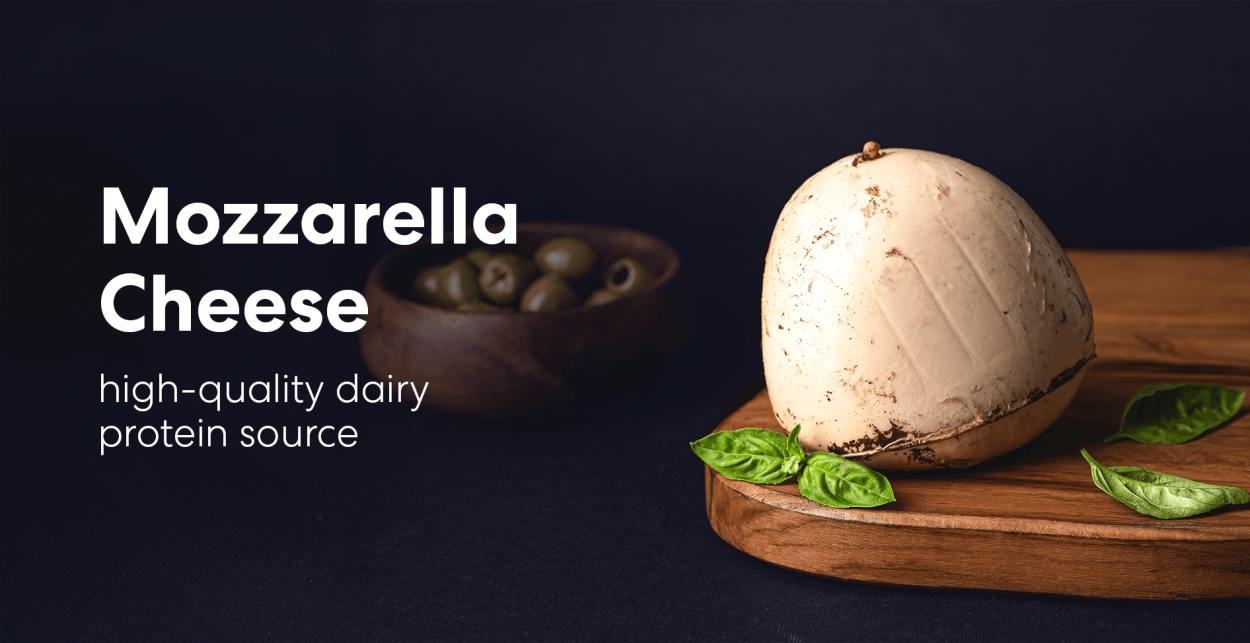
Mozzarella cheese is a popular fresh cheese valued for its mild flavor, soft texture, and excellent melting properties. Beyond its culinary appeal, scientific research highlights mozzarella especially part skim mozzarella as a nutrient-dense functional food that can support bone health, muscle function, and overall dietary quality when consumed in appropriate amounts.
Nutritional Profile of Mozzarella Cheese
Mozzarella is a high-quality dairy protein source with essential nutrients that contribute to daily nutritional requirements.
Key nutrients : Mozzarella Cheese Health Benefits
- High-biological-value protein
- Calcium and phosphorus
- Vitamin B12 and riboflavin
- Zinc, selenium, and magnesium
- Moderate fat (lower in part-skim varieties)
(Capcarova et al., 2024; Jhones)
Functional Properties of Mozzarella Cheese
Mozzarella is classified as a functional cheese due to its physicochemical and nutritional characteristics.
Research shows that mozzarella exhibits:
- Excellent melting and stretching ability
- High water-binding capacity
- Easily digestible milk proteins
These properties make it suitable not only for food applications but also for improved protein and calcium bioavailability (Ah & Tagalpallewar, 2017).
Health Benefits of Mozzarella Cheese
1. Supports Bone and Dental Health
Mozzarella is rich in calcium and phosphorus, minerals essential for bone mineralization and tooth integrity. Regular intake contributes to maintaining bone density across age groups.
Benefit:
- Reduces risk of osteoporosis
- Supports skeletal development in children and adolescents
(Capcarova et al., 2024)
2. High-Quality Protein for Muscle Health
Mozzarella provides complete proteins containing all essential amino acids. These proteins support muscle repair, growth, and satiety.
Benefit:
- Useful for children, athletes, and older adults
- Supports recovery and lean body mass
(Jhones)
3. Lower Fat Option in Part-Skim Mozzarella
Part-skim mozzarella offers the nutritional benefits of cheese with reduced saturated fat, making it suitable for individuals concerned about heart health.
Benefit:
- Supports lipid management when eaten in moderation
- Fits into calorie-controlled diets
(Jhones)
4. Source of Essential and Trace Elements
Studies on mozzarella available in the European market demonstrate that it provides safe and meaningful levels of essential trace elements such as zinc, selenium, and iodine, without exceeding safety thresholds.
Benefit:
- Supports immune function
- Contributes to antioxidant defense
(Capcarova et al., 2024)
5. Digestibility and Gut Comfort
Mozzarella is a fresh, low-aged cheese, making it easier to digest compared to aged cheeses. Its lower lactose content improves tolerance in individuals with mild lactose sensitivity.
Benefit:
- Better digestive comfort
- Suitable for sensitive populations
(Ah & Tagalpallewar, 2017)
6. Potential for Functional Enhancement
Research indicates that fortification with resistant starch or inulin can further improve mozzarella’s functional properties and fiber content without compromising quality.
Benefit:
- Potential prebiotic effects
- Improved texture and moisture retention
(Bi et al., 2016)
Is Mozzarella Safe to Eat?
Yes. Scientific evaluations confirm that mozzarella cheese is safe for regular consumption when eaten within recommended portion sizes. Consumer exposure assessments show that mineral and trace element intake from mozzarella remains well below toxic levels (Capcarova et al., 2024).
How Much Mozzarella Is Safe to Eat?
Recommended Intake
For healthy adults:
- 30–50 g per serving (about 1–2 small slices or ¼ cup shredded)
- 3–5 times per week
For children and adolescents:
- 20–30 g per serving, depending on age and energy needs
Who Should Limit Intake?
- Individuals with hyperlipidemia (choose part-skim)
- Those on low-sodium diets
- People with severe lactose intolerance or dairy allergy
Myths and Facts About Mozzarella
| Myth | Fact |
|---|---|
| Cheese is unhealthy | Mozzarella is nutrient-dense when eaten in moderation |
| High in fat | Part-skim mozzarella is relatively low in fat |
| Causes weight gain | Portion-controlled intake supports satiety |
| Hard to digest | Fresh mozzarella is easier to digest than aged cheeses |
Conclusion
Mozzarella cheese is a nutrient-rich dairy food that provides high-quality protein, calcium, phosphorus and other essential nutrients. It supports bone strength, muscle maintenance and overall nutritional balance. Because it is soft in texture, mild in flavor and easy to digest compared to many aged cheeses, it fits well into everyday Indian meals – from salads and sandwiches to home-style cooked dishes.
Beyond regular home consumption, mozzarella can also be relevant in structured healthcare nutrition. In preventive care models such as those promoted by Even Healthcare, nutrition is an important part of managing lifestyle conditions, recovery plans, and long-term wellness. Protein-rich, portion-controlled dairy options like part-skim mozzarella can support muscle health, satiety, and balanced diet planning under medical guidance.
Similarly, in clinical settings such as Even Hospitals, diet plays a key role in patient recovery. Soft, easily digestible, moderate-fat dairy products may be included in therapeutic meal plans — particularly for patients who require higher protein intake for wound healing, post-surgery recovery, or prevention of muscle loss in older adults.
By choosing part-skim varieties and practicing portion control, mozzarella can safely fit into balanced diets — whether at home, as part of preventive healthcare programs, or within hospital-guided nutrition plans..
References
- Ah, J., & Tagalpallewar, G. P. (2017). Functional properties of mozzarella cheese for its end use application. Journal of Food Science and Technology, 54(12), 3766–3778. https://doi.org/10.1007/s13197-017-2886-z
- Jhones, M. The health benefits of part-skim mozzarella cheese. Department of Dairy Research, University of Texas.
- Capcarova, M., Frigenti, M., Arvay, J., et al. (2024). Levels of essential and trace elements in mozzarella available on the Slovak market with the estimation of consumer exposure. Biological Trace Element Research, 202(5), 2357–2366. https://doi.org/10.1007/s12011-023-03813-x
- Bi, W., Zhao, W., Li, D., et al. (2016). Effect of resistant starch and inulin on the properties of imitation mozzarella cheese. International Journal of Food Properties, 19(1), 159–171. https://doi.org/10.1080/10942912.2015.1013634