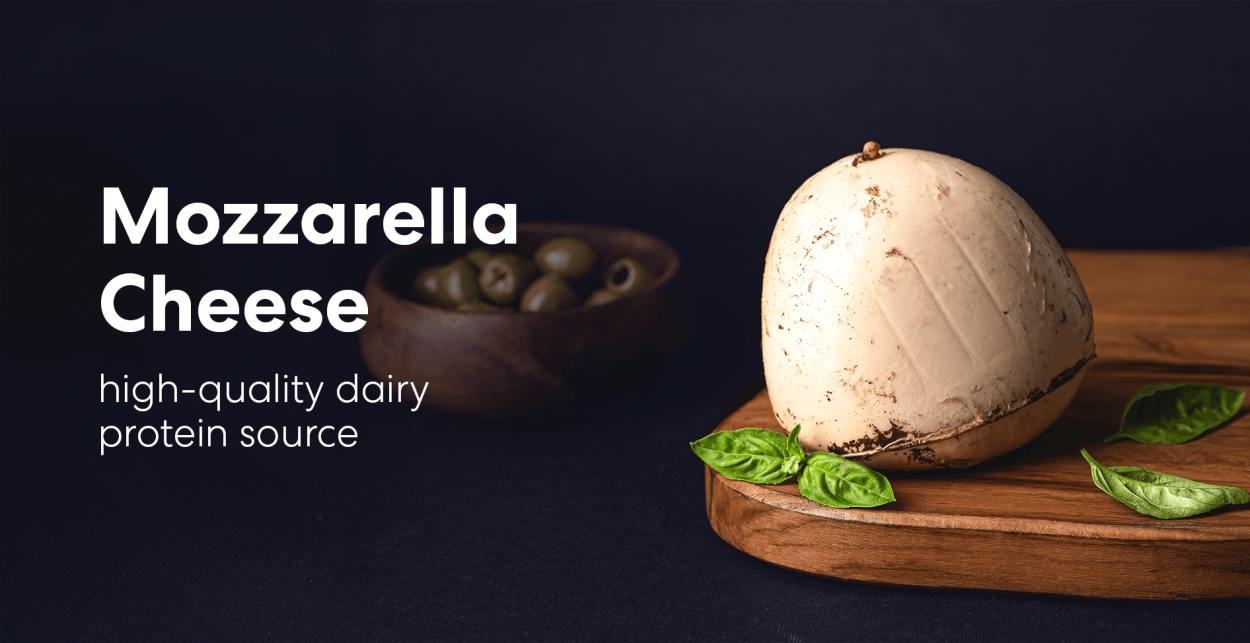
Mozzarella cheese benefits go beyond its melt: this fresh, mild cheese is a high-quality protein and a strong source of calcium and phosphorus that support bone, dental and muscle health – and it is easier to digest and lower in fat (especially part-skim) than most aged cheeses. Here is the nutrition, the benefits, how much is safe, and who should limit it.
Reviewed by Dr. Kamar Afshan, Clinical Nutritionist. Last updated: 9 June 2026.
Key takeaways: mozzarella cheese benefits
- High-quality protein: roughly 6-7 g per 30 g serving, with all essential amino acids for muscle and satiety.
- Strong for bones and teeth: rich in calcium and phosphorus.
- Lower-fat option: part-skim mozzarella keeps the protein and calcium with less saturated fat.
- Easier to digest: a fresh, low-aged cheese with less lactose than many aged cheeses.
- Sensible portion: about 30-50 g per serving, 3-5 times a week for adults.
Mozzarella cheese nutrition
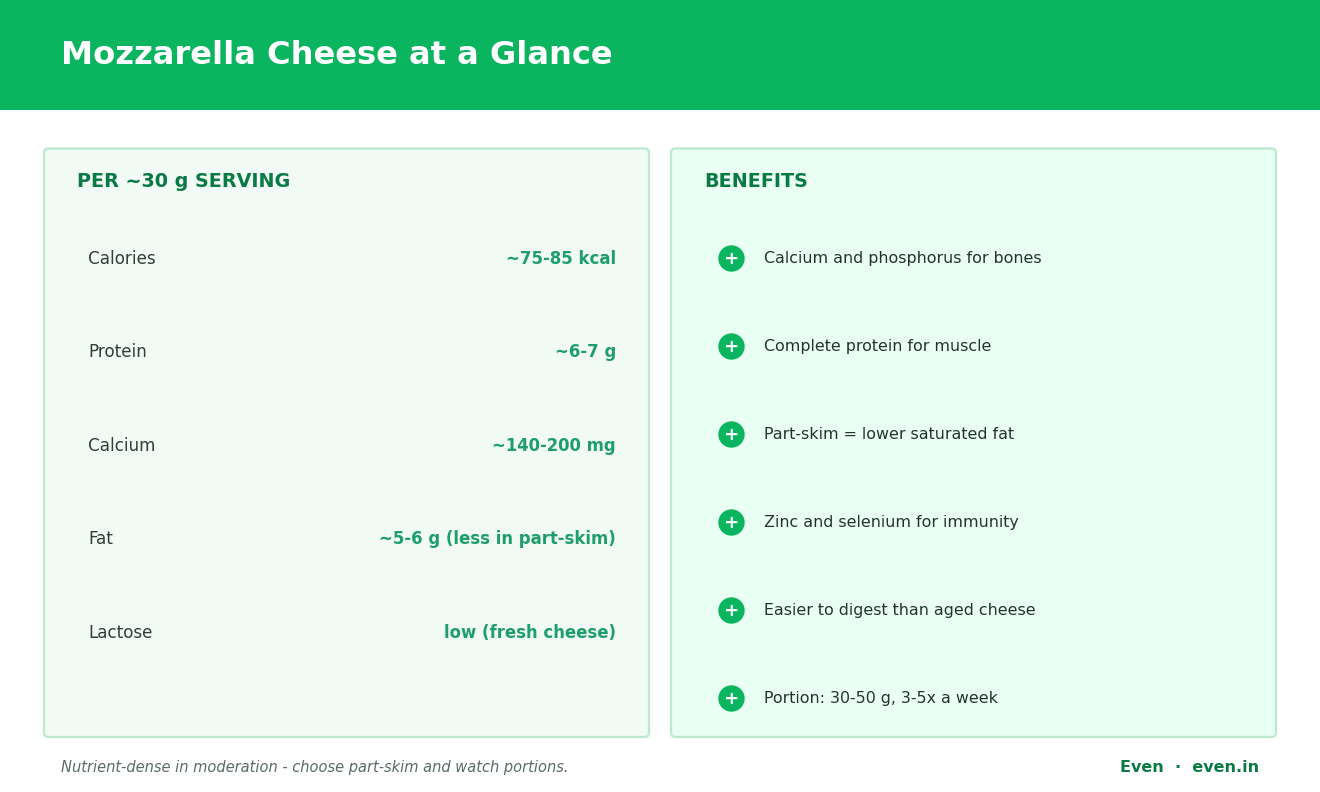
| Nutrient (per ~30 g serving) | Amount |
|---|---|
| Calories | ~75-85 kcal |
| Protein | ~6-7 g (complete protein) |
| Calcium | ~140-200 mg |
| Fat | ~5-6 g (lower in part-skim) |
| Also provides | Phosphorus, vitamin B12, riboflavin, zinc, selenium |
Health benefits of mozzarella cheese
1. Supports bone and dental health
Mozzarella is rich in calcium and phosphorus, the minerals essential for bone mineralisation and tooth strength, helping maintain bone density across all ages and supporting growth in children.
2. High-quality protein for muscle
Its complete protein supports muscle repair, growth and satiety, useful for children, athletes and older adults. For more protein-rich foods, see green moong dal and red lentils.
3. A lower-fat option (part-skim)
Part-skim mozzarella delivers the protein and calcium of cheese with less saturated fat, making it a smarter choice when managing heart health alongside foods like hazelnuts and oats.
4. Source of essential trace elements
Mozzarella supplies meaningful, safe levels of zinc, selenium and iodine that support immune function and antioxidant defence.
5. Easier digestion and lower lactose
As a fresh, low-aged cheese, mozzarella is easier to digest than aged cheeses and its lower lactose content improves tolerance for people with mild lactose sensitivity.
How much mozzarella is safe to eat?
Mozzarella is safe for regular consumption within sensible portions:
- Adults: 30-50 g per serving (1-2 small slices or 1/4 cup shredded), 3-5 times a week.
- Children and adolescents: 20-30 g per serving, depending on age and energy needs.
Who should limit it: people with high cholesterol (choose part-skim), those on low-sodium diets, and anyone with severe lactose intolerance or a dairy allergy.
Myths and facts about mozzarella
| Myth | Fact |
|---|---|
| Cheese is unhealthy | Mozzarella is nutrient-dense in moderation |
| It is high in fat | Part-skim mozzarella is relatively low in fat |
| It causes weight gain | Portion-controlled intake supports satiety |
| It is hard to digest | Fresh mozzarella is easier to digest than aged cheese |
Frequently Asked Questions
Yes, in moderation. Mozzarella is a good source of high-quality protein, calcium and phosphorus, and part-skim mozzarella is relatively low in fat.
For adults, about 30-50 g per serving (1-2 small slices or 1/4 cup shredded), 3-5 times a week. Children and adolescents: 20-30 g per serving.
Portion-controlled, part-skim mozzarella can fit a weight-management diet because its protein supports fullness, but keep an eye on portions and total calories.
Part-skim has less saturated fat while keeping the protein and calcium, so it is the better choice for heart health and calorie control.
Fresh mozzarella is lower in lactose than many cheeses and is often tolerated in small amounts, but those with severe intolerance or dairy allergy should avoid it.
Mozzarella provides complete, high-quality protein – roughly 6-7 g per 30 g serving – supporting muscle repair and satiety.
Yes. Its calcium and phosphorus support bone mineralisation and dental health across all ages.
The bottom line
Mozzarella is a nutrient-rich dairy food: high-quality protein, calcium and phosphorus for bones and muscle, easy digestion, and a lower-fat part-skim option. Eaten in controlled portions, the mozzarella cheese benefits fit well into balanced, everyday meals.
Related reading
- Green moong dal: benefits, protein and nutrition
- Health benefits of red lentils (masoor dal)
- Hazelnuts: heart, cholesterol and metabolic health
- Oats: benefits, side effects and how to use them
- More from the Even Health blog
For diet and care built around your needs, explore Even’s health insurance with OPD cover and in-person treatment at Even Hospital, a multispecialty hospital in Bangalore.
References
- Capcarova, M., et al. (2024). Levels of essential and trace elements in mozzarella with estimation of consumer exposure. Biological Trace Element Research, 202(5), 2357-2366.
- Ah, J., & Tagalpallewar, G. P. (2017). Functional properties of mozzarella cheese for end-use application. Journal of Food Science and Technology, 54(12), 3766-3778.
- Bi, W., et al. (2016). Effect of resistant starch and inulin on imitation mozzarella cheese. International Journal of Food Properties, 19(1), 159-171.