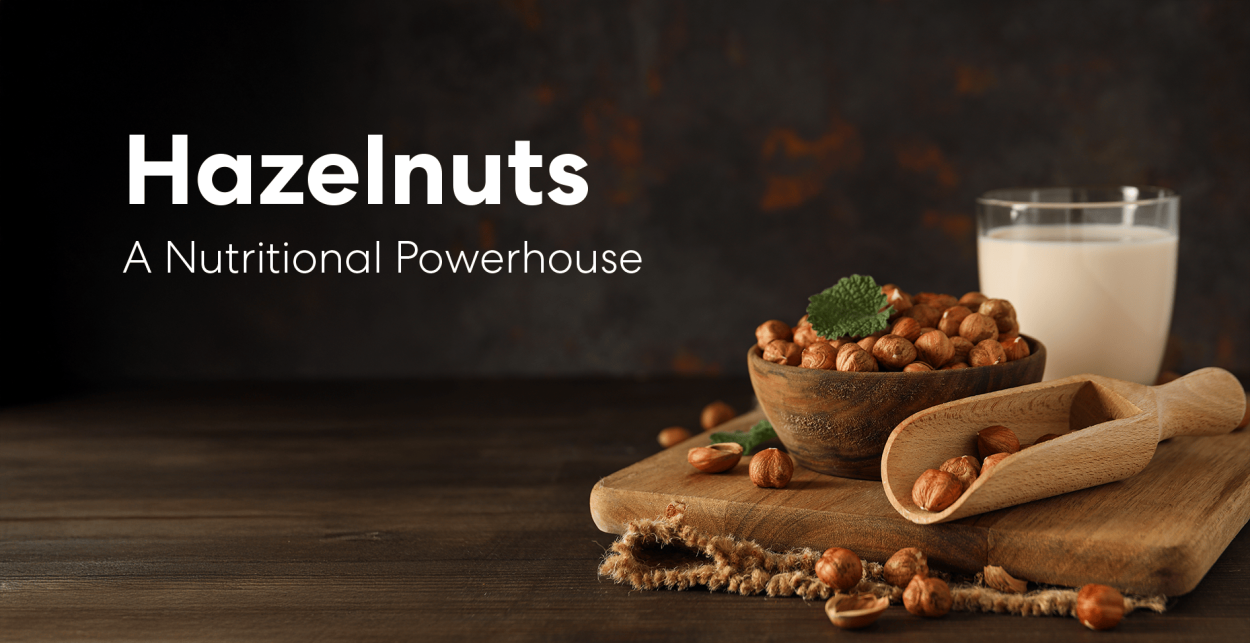
Hazelnuts are a nutrient-dense tree nut rich in heart-healthy monounsaturated fats, vitamin E, fibre and antioxidants. Eaten in moderation, they support heart health, healthy cholesterol, blood sugar control and weight management – without causing weight gain. This guide covers the main health benefits of hazelnuts, their nutrition, how to eat them and who should be careful.
Last updated: 16 June 2026.
Key takeaways
- Hazelnuts are rich in monounsaturated fats that help lower LDL (“bad”) cholesterol.
- They are one of the best food sources of vitamin E, a powerful antioxidant for skin and cells.
- Despite being calorie-dense, a moderate daily handful (about 20-30 g) is not linked to weight gain.
- Their fibre and healthy fats help steady blood sugar and keep you full.
- Best eaten as a small daily handful – raw or dry-roasted, unsalted.
Hazelnuts nutrition (per 28 g / ~20 nuts)
| Nutrient | Amount | Why it matters |
|---|---|---|
| Calories | ~178 kcal | Energy-dense – mind portions |
| Healthy fats | ~17 g (mostly monounsaturated) | Heart and cholesterol |
| Protein | ~4 g | Satiety and repair |
| Fibre | ~3 g | Digestion and fullness |
| Vitamin E | ~21% of daily value | Antioxidant for skin and cells |
| Magnesium, copper, manganese | Good source | Energy, bones, metabolism |
Values are approximate and based on USDA data.
Health benefits of hazelnuts
1. Supports heart health and cholesterol
Hazelnuts are high in monounsaturated fats, which studies link to lower LDL cholesterol and improved heart health. Their potassium and magnesium also support healthy blood pressure.
2. Rich in antioxidants
Hazelnuts are one of the best nut sources of vitamin E and also contain polyphenols, which help fight free radicals, reduce inflammation and protect skin and cells from damage.
3. Helps with blood sugar control
The combination of healthy fats, fibre and protein slows digestion and helps avoid blood-sugar spikes, making a small handful a smart snack in a diabetes-friendly diet.
4. Aids weight management
Although calorie-dense, hazelnuts are filling, and research suggests moderate nut intake is not associated with weight gain – the protein and fibre help curb overeating.
5. Nutrient density in a small serving
A small handful delivers healthy fats, plant protein, fibre, vitamin E, magnesium, copper and manganese – excellent nutrition for very little volume.
How to eat hazelnuts
- Eat a small daily handful (about 20-30 g), raw or dry-roasted and unsalted.
- Add to porridge, yoghurt or your morning oats.
- Sprinkle chopped over salads or sabzi for crunch.
- Choose plain hazelnuts over sugary chocolate-hazelnut spreads.
Side effects and who should be careful
Hazelnuts are a common tree-nut allergen, so avoid them if you have a nut allergy. Because they are calorie-dense, stick to a handful to avoid excess calories. Salted or chocolate-coated versions add sodium and sugar, so choose plain where possible.
Frequently Asked Questions
Yes. Hazelnuts are rich in heart-healthy monounsaturated fats, vitamin E, fibre and antioxidants, which support heart health, cholesterol, blood sugar control and weight management when eaten in moderation.
A small daily handful, about 20 to 30 g (roughly 20 nuts), is a good portion – enough for the benefits without excess calories.
Yes. Their monounsaturated fats are linked to lower LDL (bad) cholesterol and better heart health.
Eaten in moderation, no. Although calorie-dense, hazelnuts are filling and research shows moderate nut intake is not associated with weight gain.
Their healthy fats, fibre and protein slow digestion and help avoid blood-sugar spikes, making a small handful a good snack in a diabetes-friendly diet.
Both are healthy. Choose raw or dry-roasted and unsalted over salted or chocolate-coated versions to avoid extra sodium and sugar.
The bottom line
Hazelnuts are a heart-healthy, antioxidant-rich nut that fits well into a balanced diet when eaten as a small daily handful. Explore more everyday nutrition in our Health section.
A good diet is one part of staying healthy; covering check-ups, tests and treatment is another. See health insurance with OPD cover, and in-person care at Even Hospital in Bangalore when you need it.
Related reading
- Oats: benefits, side effects and how to use
- Red lentils (masoor dal): benefits and nutrition
- Diabetes: types, symptoms and management
- Mulberry: benefits and side effects
- More from the Even Health blog
References
- USDA FoodData Central – hazelnuts, nutrient values.
- Harvard T.H. Chan School of Public Health – nuts and heart health.
- American Heart Association – nuts and cardiovascular health.