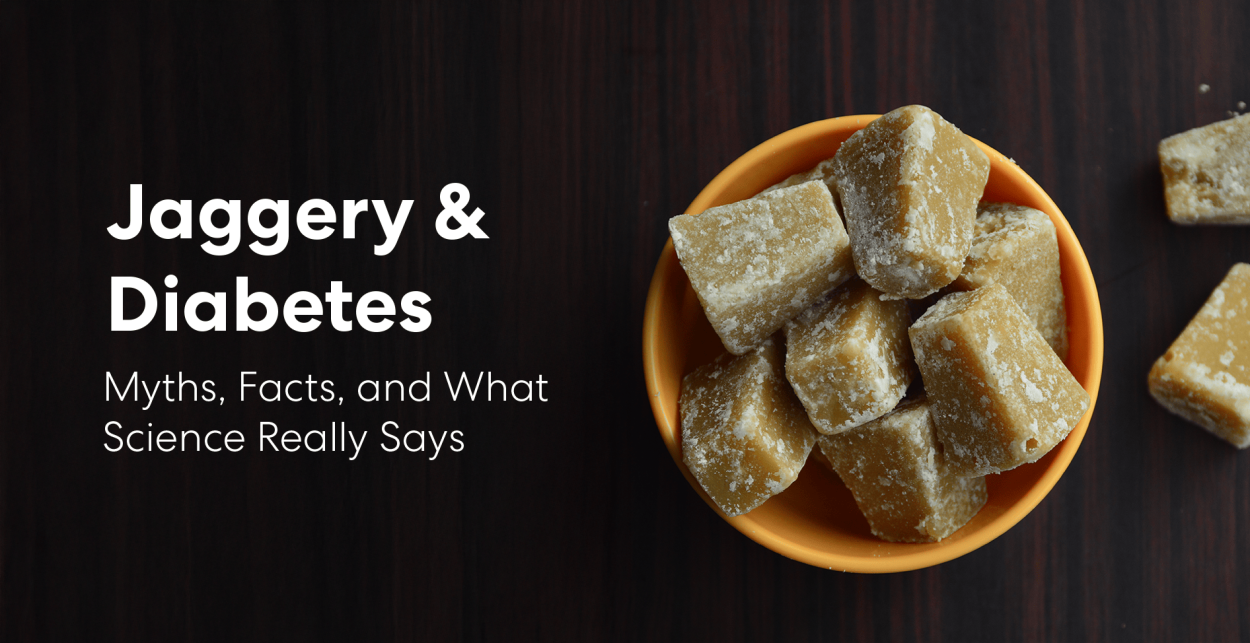
Can people with diabetes eat jaggery (gud)? The short answer: jaggery is not a safe sugar substitute for diabetics. Despite being “natural,” jaggery is roughly 65-85% sucrose and raises blood sugar much like white sugar. It does contain small amounts of iron and minerals, but not enough to offset its effect on glucose. This guide separates the myths from the facts on jaggery and diabetes.
Last updated: 16 June 2026.
Key takeaways
- Jaggery is about 65-85% sucrose and has a high glycaemic index – it raises blood sugar like sugar.
- It is not a safe sugar replacement for people with diabetes.
- Its small amounts of iron and minerals do not cancel out its blood-sugar impact.
- If you have diabetes, treat jaggery the same as sugar: limit it sharply or avoid it.
- For sweetness with less glucose impact, ask your doctor about approved sweeteners.
Jaggery vs sugar: how different are they?
| Feature | Jaggery (gud) | White sugar |
|---|---|---|
| Main content | ~65-85% sucrose | ~99% sucrose |
| Glycaemic index | High (~84) | High (~65-80) |
| Calories (per 100 g) | ~383 kcal | ~387 kcal |
| Minerals | Trace iron, magnesium | Virtually none |
| Safe for diabetes? | No | No |
The mineral content is the only real nutritional edge jaggery has – but the quantities are too small to matter for health, and the sugar load is what counts for diabetes.
Myths vs facts
Myth: “Jaggery is safe for diabetics because it is natural”
Fact: “Natural” does not mean low-sugar. Jaggery is concentrated sugarcane juice and behaves like sugar in the body, spiking blood glucose.
Myth: “Jaggery has a low glycaemic index”
Fact: Jaggery has a high glycaemic index (around 84), similar to or higher than table sugar – so it raises blood sugar quickly.
Myth: “The iron in jaggery makes it healthy for diabetics”
Fact: Any iron and minerals are present in tiny amounts. You would have to eat a harmful amount of sugar to get meaningful minerals – better to get iron from foods like red lentils and leafy greens.
Can people with diabetes eat jaggery at all?
It is best avoided. If you do not have diabetes, jaggery in small amounts is fine as an occasional sweetener. If you do have diabetes or prediabetes, treat jaggery exactly like sugar – limit it sharply and account for it in your daily carbs. Always follow your doctor or dietitian’s advice. Learn more in our complete guide to diabetes.
Better choices for blood sugar
- Build meals around low-GI, high-fibre foods like oats and green moong dal.
- Satisfy sweet cravings with whole fruit rather than concentrated sweeteners.
- Ask your doctor about diabetes-approved sweeteners if you need sweetness.
- Get regular blood-sugar checks as part of an annual health check-up.
Frequently Asked Questions
It is best avoided. Jaggery is about 65-85% sucrose with a high glycaemic index, so it raises blood sugar much like sugar. People with diabetes should treat it like sugar and limit it sharply.
Not meaningfully. Jaggery has slightly more minerals, but its sugar content and glycaemic impact are similar to white sugar, so neither is safe for diabetes.
Jaggery has a high glycaemic index of around 84, similar to or higher than table sugar, meaning it spikes blood sugar quickly.
Yes. Jaggery is concentrated sugar and raises blood glucose just like white sugar.
It contains only trace amounts of iron. You would need to eat an unhealthy quantity of sugar to get meaningful iron – better sources are red lentils, leafy greens and other whole foods.
Focus on whole fruit for sweetness and low-GI foods, and ask your doctor about diabetes-approved sweeteners rather than switching one sugar for another.
The bottom line
Jaggery is not a healthy sugar substitute for diabetes – it is essentially sugar with a trace of minerals. If you are managing blood sugar, treat it like sugar and keep it to a minimum. Explore more in our Health section.
Managing diabetes is easier when consultations, tests and medicines are covered: see health insurance with OPD cover, plus diabetes care at Even Hospital in Bangalore when you need in-person support.
Related reading
- Diabetes: types, symptoms and management
- Oats: benefits, side effects and how to use
- Green moong dal: protein and blood sugar
- Red lentils (masoor dal): benefits and nutrition
- More from the Even Health blog
References
- Indian Council of Medical Research (ICMR-NIN) – dietary guidelines and sugar intake.
- American Diabetes Association (ADA) – sugar and sweeteners.
- Published glycaemic index data for jaggery and sucrose.