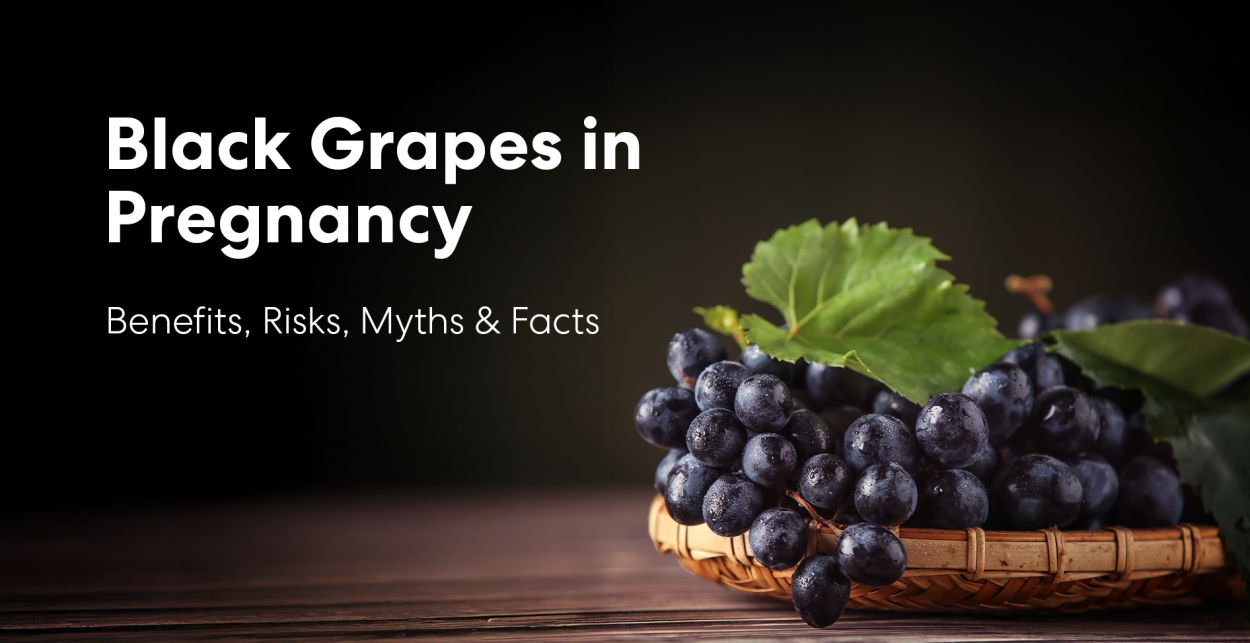
Black grapes during pregnancy are a common craving and a surprisingly controversial topic. From family warnings about “body heat” to internet myths about miscarriage, the fruit has attracted far more fear than the science justifies. This guide breaks down exactly what the research says about eating black grapes while pregnant: their nutritional profile, proven benefits, real risks, trimester-wise guidance and the truth behind the most common myths.
Key takeaways
- Black grapes are safe in moderation during pregnancy and provide folate, antioxidants and vitamin C.
- They support immunity, digestion and iron absorption.
- Wash thoroughly before eating to reduce pesticide and infection risk.
- Enjoy in moderate amounts; some prefer to limit large quantities in late pregnancy.
- If you have gestational diabetes, watch portions and check with your doctor.
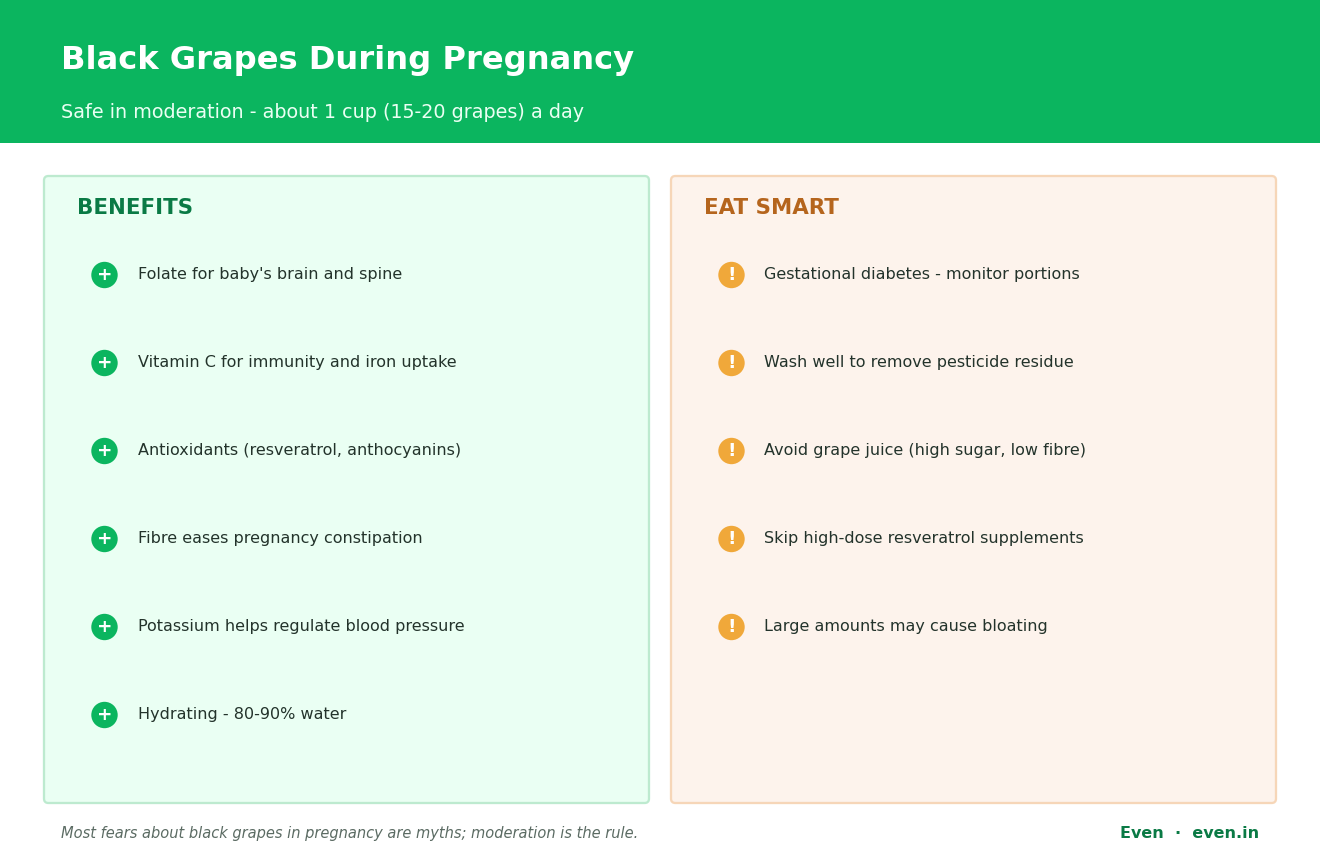
Yes, black grapes are safe to eat during pregnancy when consumed in moderation approximately 1 cup (15 – 20 grapes) per day. They are rich in folate, Vitamin C, antioxidants and fiber, all of which support maternal and fetal health. Women with gestational diabetes should monitor portions due to the fruit’s natural sugar content. Most fears surrounding black grapes in pregnancy are cultural myths with no scientific basis.
Reviewed for accuracy. Last updated: 9 June 2026.
Nutritional Value of Black Grapes (Per 100g)
Before evaluating benefits, it helps to understand what black grapes actually contain. Their nutrient density is one of the key reasons dietitians often recommend them as part of a balanced pregnancy diet.
| Nutrient | Amount (per 100g) | Pregnancy Relevance |
|---|---|---|
| Folate (B9) | ~2 mcg | Neural tube defect prevention |
| Vitamin C | ~10.8 mg | Immunity, iron absorption |
| Vitamin K | ~14.6 mcg | Blood clotting, bone development |
| Potassium | ~191 mg | Blood pressure regulation |
| Calcium | ~10 mg | Fetal bone & teeth formation |
| Iron | ~0.36 mg | Prevents maternal anaemia |
| Dietary Fiber | ~0.9 g | Relieves pregnancy constipation |
| Water Content | ~80-90% | Hydration support |
| Natural Sugars | ~15-16 g | Monitored in gestational diabetes |
Black grapes also contain a powerful class of polyphenols including resveratrol, anthocyanins and flavonoids – that give the fruit its deep colour and much of its antioxidant activity.
7 Evidence-Based Benefits of Black Grapes During Pregnancy
1. Supports Fetal Brain & Spine Development
Black grapes contain folate (Vitamin B9), a nutrient the CDC identifies as critical during early pregnancy for preventing neural tube defects such as spina bifida and anencephaly. Adequate folate intake in the first trimester is particularly important – often before many women even confirm their pregnancy.
2. Strengthens Maternal & Fetal Immunity
Vitamin C in black grapes supports the production of white blood cells and acts as an antioxidant that neutralises free radicals. During pregnancy, when the immune system is naturally modulated, this added protection helps reduce the risk of common infections for both mother and baby.
3. Rich in Antioxidants That Protect Mother & Baby
A 2022 peer-reviewed study published in Antioxidants (Basel) found that antioxidant-rich diets during pregnancy significantly reduced oxidative stress markers and were associated with improved fetal growth and maternal health outcomes. Black grapes containing resveratrol, flavonoids and anthocyanins – are among the most antioxidant-dense fruits available.
4. Relieves Pregnancy Constipation
Constipation affects up to 40% of pregnant women, largely due to progesterone slowing gastrointestinal motility. The dietary fiber in black grapes adds bulk to stool and supports regular bowel movements, providing natural relief without the need for supplements.
5. Prevents Dehydration
Composed of approximately 80-90% water, black grapes contribute to daily fluid intake at a time when hydration needs increase significantly. Adequate hydration during pregnancy supports amniotic fluid levels, nutrient transport to the fetus and prevention of urinary tract infections.
6. Helps Regulate Blood Pressure
Potassium is a key electrolyte that counteracts the blood pressure-raising effects of sodium. Hypertensive disorders of pregnancy including preeclampsia affect around 10% of pregnancies globally (WHO). Maintaining adequate potassium intake through whole foods like grapes supports cardiovascular health throughout all trimesters.
7. Reduces Inflammation
Polyphenols such as resveratrol and quercetin in black grapes have demonstrated anti-inflammatory properties in multiple studies. Chronic low-grade inflammation during pregnancy has been linked to preterm birth and other complications making anti-inflammatory foods a valuable part of a balanced prenatal diet.
Possible Risks & Who Should Be Cautious
Black grapes are safe for most pregnant women but moderation matters. Here are the scenarios where extra caution is warranted:
🔶 Gestational Diabetes: Black grapes contain 15-16g of natural sugars per 100g. Women diagnosed with gestational diabetes should consult their dietitian before including grapes and monitor blood sugar response carefully.
🔶 Digestive Sensitivity: Eating large quantities can cause bloating, loose stools or diarrhea due to their fiber and fructose content. Stick to the recommended 1 cup per day.
🔶 Pesticide Exposure: Grapes consistently appear on the Environmental Working Group’s “Dirty Dozen” list for pesticide residues. Always wash thoroughly under running water or soak briefly in a diluted baking soda solution before eating.
🔶 Caloric Consideration: About 100 calories per cup – modest but worth tracking if gestational weight gain is being carefully managed.
🔶 Resveratrol Supplements: While the natural resveratrol in whole grapes is safe, high-dose resveratrol supplements are not recommended during pregnancy and should be avoided unless advised by a doctor.
Recommended daily intake: Approximately 1 cup (15-20 grapes / ~150g) is considered safe for most pregnant women as part of a varied, balanced diet.
Can I Eat Black Grapes in Each Trimester?
One of the most searched questions about this topic – here is a clear, trimester-wise breakdown:
| Trimester | Safe to Eat? | Key Consideration |
|---|---|---|
| First Trimester (Weeks 1-12) | ✅ Yes | Folate in grapes supports neural tube development. Wash well to avoid infections. |
| Second Trimester (Weeks 13-26) | ✅ Yes | Safe in moderation. If diagnosed with gestational diabetes, monitor portions. |
| Third Trimester (Weeks 27-40) | ✅ Yes | No restrictions. Avoid grape juice due to high sugar and low fiber. |
5 Common Myths About Black Grapes in Pregnancy – Debunked
❌ Myth 1: Black grapes cause miscarriage.
✅ Fact: There is no peer-reviewed scientific evidence linking moderate black grape consumption to miscarriage. This myth likely stems from cultural beliefs, not clinical data. Eating 1 cup of grapes per day is considered safe by nutrition professionals.
❌ Myth 2: Grapes produce “body heat” and harm the baby.
✅ Fact: The concept of foods causing “body heat” is a traditional belief with no basis in nutritional science. Black grapes are composed of 80-90% water – making them a hydrating, cooling food by any objective measure.
❌ Myth 3: Resveratrol in grapes is dangerous during pregnancy.
✅ Fact: Caution around resveratrol applies to high-dose supplements, not whole fruit. A cup of black grapes contains only a trace amount of resveratrol – far below any dose studied for adverse effects. Eating whole grapes is not the same as taking a supplement.
❌ Myth 4: Grapes must be avoided in the third trimester.
✅ Fact: No established medical guideline from ACOG, WHO or any national nutrition board restricts grape consumption by trimester. Moderation is the guiding principle throughout all three trimesters.
❌ Myth 5: Grapes are too sugary to eat during pregnancy.
✅ Fact: While grapes do contain natural sugars, their fiber, water content and micronutrients make them far preferable to processed sweet foods. When eaten in controlled portions, they are a nutritionally beneficial snack. The exception is women with confirmed gestational diabetes, who should discuss fruit portions with their care team.
What the Research Says
A 2022 review published in Antioxidants (Basel) by Sebastiani et al. examined the effects of antioxidant intake during pregnancy across multiple controlled studies. The researchers found that higher dietary antioxidant intake was associated with:
✔ Reduced oxidative stress in both mother and fetus ✔ Improved fetal growth parameters ✔ Better maternal health outcomes, including lower inflammation markers
The authors concluded that antioxidant-rich foods – including fruits like grapes – deserve a place in evidence-based prenatal nutrition guidelines. (DOI: 10.3390/antiox11040648 · PMID: 35453333)
Additionally, the CDC and ACOG both recommend folate-rich foods during pregnancy, and WHO guidelines emphasise that a diverse diet including whole fruits supports healthy pregnancy outcomes. Black grapes, eaten in moderation, are consistent with all of these recommendations.
Safe & Smart Ways to Include Black Grapes in Your Pregnancy Diet
🚿 Wash thoroughly under running water for at least 30 seconds, or soak briefly in diluted baking soda water to reduce pesticide residues.
🍇 Eat fresh, firm grapes – avoid stale, wrinkled, or fermented-smelling grapes, which can carry mould or bacteria.
🥜 Pair with protein or healthy fat (e.g., a small handful of almonds or a cup of curd/yoghurt) to slow sugar absorption and create a more balanced snack.
🥤 Avoid grape juice – it has significantly higher sugar content, almost no fiber and fewer beneficial polyphenols compared to whole grapes.
🥗 Add to fruit salads, smoothie bowls, or oatmeal for variety while keeping portions in check.
🌡️ Store in the refrigerator and consume within 3-5 days of purchase for optimal freshness and safety.
Frequently Asked Questions
Yes. Black grapes are safe in the first trimester, and their folate is particularly valuable for supporting neural tube development. Wash them thoroughly before eating to minimise any risk of foodborne illness.
No. There is no scientific evidence that eating black grapes in normal food quantities causes miscarriage – it is a widely circulated myth with no clinical basis. Around 1 cup per day is safe for most pregnant women.
About 1 cup (15-20 grapes, roughly 150 g) per day is recommended for pregnant women without gestational diabetes. Those managing gestational diabetes should ask their dietitian for personalised guidance.
Yes, indirectly. They contain folate (Vitamin B9), essential for neural tube development, plus antioxidants that support healthy fetal growth by reducing oxidative stress.
Eating black grapes in moderate portions does not cause gestational diabetes. As they contain natural sugars (about 15-16 g per 100 g), women already diagnosed should monitor blood glucose and discuss intake with their care team.
Both are nutritious. Black and red grapes have more anthocyanins and resveratrol (stronger antioxidants) than green grapes. Either is safe in moderation; black grapes offer a modest antioxidant edge.
Conclusion
Black grapes during pregnancy are far safer and more beneficial than popular myths suggest. Backed by scientific evidence, they offer meaningful amounts of folate, antioxidants, fiber and potassium all of which support a healthy pregnancy.
The key principles are simple: eat them in moderation (1 cup/day), wash them thoroughly, choose whole grapes over juice and if you have gestational diabetes, check with your dietitian. Beyond that, black grapes deserve a confident place on your pregnancy plate.
During pregnancy, consistent care matters most. Even offers family health insurance with maternity cover and maternity and women’s health care at Even Hospital, Bangalore.
For personalised pregnancy nutrition advice, it always helps to check with your own doctor or dietitian. Even supports evidence-based prenatal care, with expert follow-up through Even Hospitals when you need it. Explore more in our Health section.
Related reading
- Mulberry benefits and side effects
- Water apple (jamrul): benefits
- Diabetes: what you need to know
- Thriving after 50: women’s health guide
- More from the Even Health blog
References
- Sebastiani G, Navarro-Tapia E, Almeida-Toledano L, et al. Effects of Antioxidant Intake on Fetal Development and Maternal/Neonatal Health during Pregnancy. Antioxidants (Basel). 2022;11(4):648. DOI: 10.3390/antiox11040648 · PMID: 35453333
- Centers for Disease Control and Prevention (CDC). Folic Acid. https://www.cdc.gov/ncbddd/folicacid/index.html
- World Health Organization (WHO). Nutrition during pregnancy. https://www.who.int/news-room/fact-sheets/detail/nutrition-in-pregnancy
- American College of Obstetricians and Gynecologists (ACOG). Nutrition During Pregnancy. https://www.acog.org/womens-health/faqs/nutrition-during-pregnancy
- USDA FoodData Central. Grapes, red or green (European type), raw. https://fdc.nal.usda.gov/