
Oats lower LDL by 5-10% and help control blood sugar. Learn benefits, side effects, daily dose (½ cup), and steel-cut vs rolled vs instant – reviewed by doctors.
Last updated: 16 June 2026.
Reviewed by: Dr. Kamar Afshan, RD, Clinical Nutritionist (Oncology Specialist)
Last reviewed: May 2026
Key Takeaways
- Oats are a science-backed functional food: regular intake lowers LDL cholesterol by 5-10% and improves blood-sugar control, primarily due to a soluble fibre called β-glucan.
- A safe daily portion is 30 – 50 g of raw oats (about ½ cup uncooked, or 1 cup cooked).
- Steel-cut oats (GI ~42) and rolled oats (GI ~55) are best for diabetics; instant oats (GI ~79 – 83) spike blood sugar like white bread.
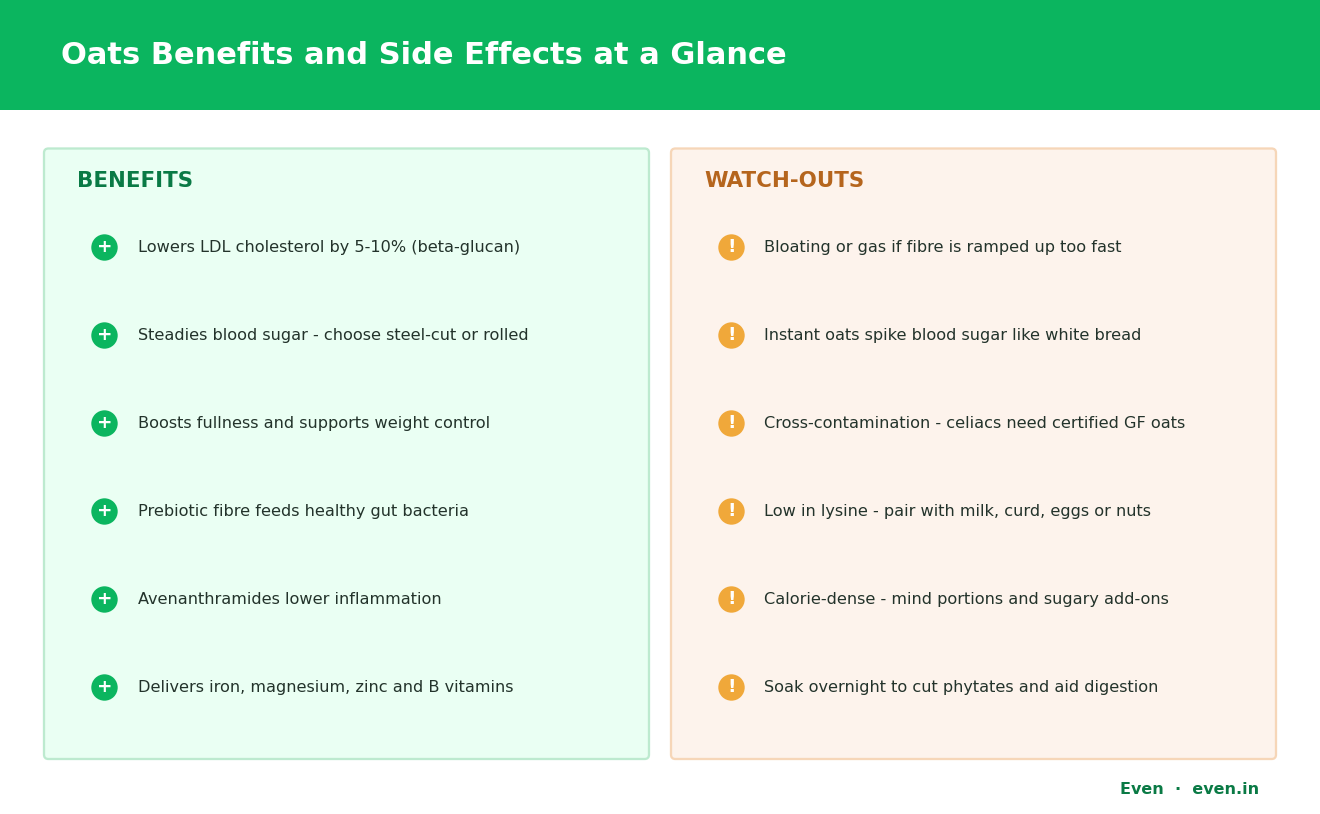
- Most common side effect is bloating or gas – caused by sudden fibre increase. Fix: ramp up gradually and drink more water.
- People with celiac disease should choose certified gluten-free oats due to cross-contamination risk.
- Oats are best paired with protein (milk, curd, eggs, nuts) – alone, they’re low in the amino acid lysine.
This is your evidence-based guide to oats benefits and side effects. Oats have moved from a basic breakfast cereal to one of the most evidence-backed functional foods worldwide. They’re recommended for heart health, blood-sugar control, weight management, and gut health – but only when the right type is eaten in the right amount. This guide covers what oats actually do for your body, when they can cause problems, and exactly how to use them – based on peer-reviewed research and Indian dietary context.
What Are Oats and Why Are They Called a “Functional Food”?
A functional food provides health benefits beyond basic nutrition. Oats (Avena sativa) qualify on every front: This balance is where the oats benefits and side effects begin.
- β-glucan, a soluble fibre responsible for most of the heart and blood-sugar benefits.
- Plant protein at 11-17% – one of the highest among whole grains.
- Avenanthramides, antioxidants unique to oats with proven anti-inflammatory action.
- Healthy lipids, B vitamins, iron, magnesium, zinc, and selenium.
According to Paudel et al. (2021) and Rasane et al. (2015), oats contain one of the highest fibre densities of any whole grain, with compounds proven to support metabolic, cardiovascular, and digestive health. These compounds underlie most of the oats benefits and side effects covered in this guide.
Health Benefits of Oats (Backed by Science)
1. Lowers LDL Cholesterol and Supports Heart Health
Regular oat consumption reduces LDL (“bad”) cholesterol by 5-10% across multiple clinical trials. β-glucan forms a viscous gel in the gut, binds to bile acids, and forces the liver to pull cholesterol from the blood to produce more.
The U.S. FDA has approved a heart-health claim for oats: at least 3 g of soluble fibre per day (roughly 1.5 cups cooked oats) is required to reduce cholesterol. Avenanthramides further support heart health by improving blood-vessel function and lowering inflammation.
Best for: people with high cholesterol, hypertension, or a family history of heart disease.
2. Helps Control Blood Sugar – but Only the Right Type
Not all oats affect blood sugar equally. The more processed the oat, the faster it spikes glucose.
Oat type comparison:
| Oat type | Glycemic Index | Processing | Best for |
|---|---|---|---|
| Steel-cut (Irish) | ~42 (low) | Minimally cut, no rolling | Diabetes, PCOS, weight loss |
| Rolled (old-fashioned) | ~55 (low-medium) | Steamed and rolled | Everyday breakfast |
| Quick / instant | ~79-83 (high) | Pre-cooked, finely cut | Avoid for blood-sugar control |
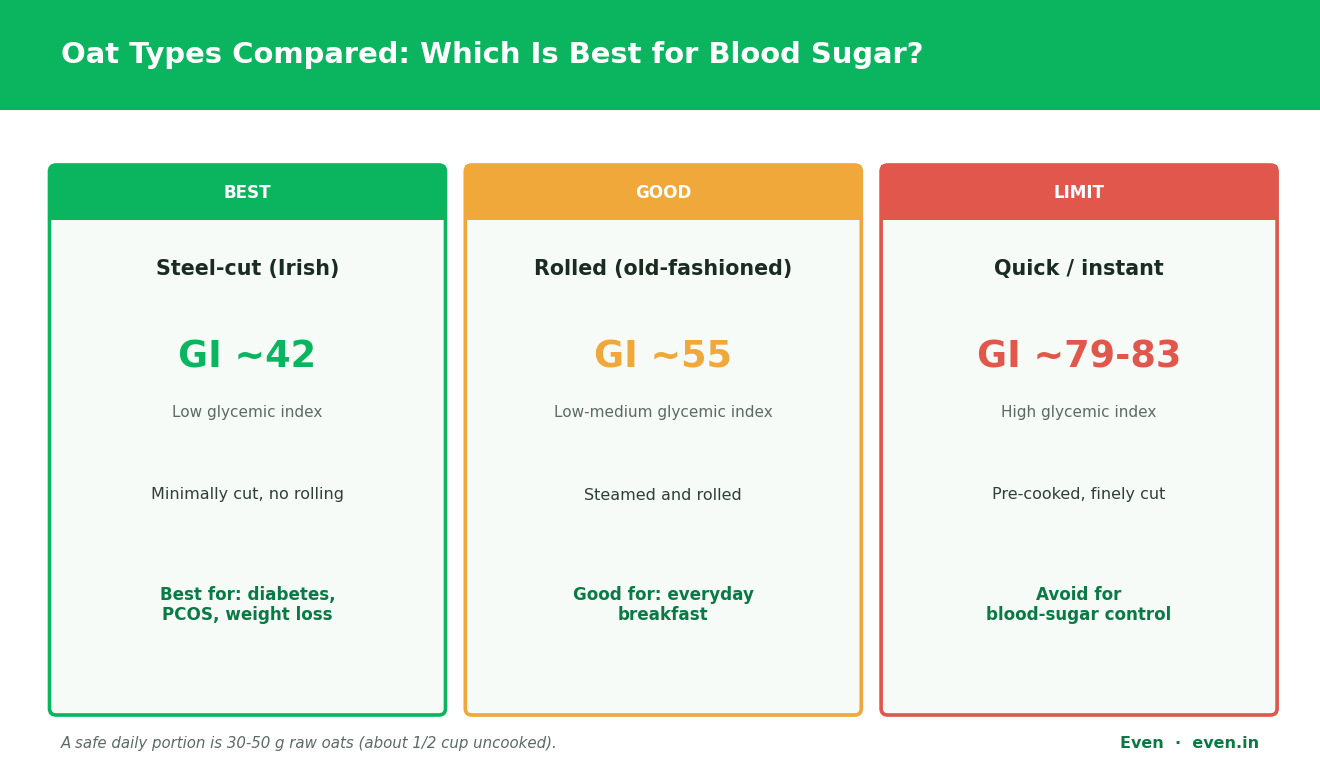
A 2019 clinical trial found instant oatmeal spiked blood sugar about as much as white bread, while steel-cut raised glucose 28% less (Zhang et al., 2021).
People with type 2 diabetes who ate oats daily for six weeks saw significant drops in fasting glucose, 24-hour glucose, and insulin levels. Higher oat intake (>5.7 g/day of oat fibre) is associated with a 22% lower risk of developing type 2 diabetes compared with low intake.
Tip for diabetics and PCOS: choose steel-cut or old-fashioned rolled oats. Skip instant.
3. Supports Healthy Weight Management
Oats help with weight control because β-glucan increases satiety, slows gastric emptying, and stabilises hunger hormones like ghrelin. Oat-based breakfasts consistently reduce calorie intake at the next meal compared with refined cereals.
Weight gain is only a risk if oats are eaten with high-calorie add-ons (sugar, honey, condensed milk, peanut butter) or in oversized portions. 1 cup cooked oats = 150-180 calories; add-ons can push this to 400-700 calories.
4. Improves Digestion and Feeds Gut Bacteria
β-glucan is a prebiotic – it feeds beneficial gut microbiota, softens stool, and reduces constipation. Paudel et al. (2021) demonstrate consistent improvements in gut-microbiome diversity and bowel regularity with regular oat intake.
5. Reduces Inflammation
Avenanthramides are unique to oats and reduce systemic inflammation, including skin irritation and itching – which is why colloidal oatmeal is used in eczema creams. Strong evidence base in food-chemistry literature (Zhang et al., 2021).
6. Provides Key Micronutrients
Oats deliver iron, magnesium, zinc, selenium, and B vitamins – supporting immune function, energy production, and nerve health. Especially useful for people with poor appetite, chronic illness, or low dietary variety.
7. Supports Muscle Recovery for Active People
Moderate protein, slow-release carbs, and a clean fat profile make oats useful pre- or post-workout – especially paired with a complete protein source like milk, eggs, or whey.
Side Effects of Oats: What’s Real and What’s Hype
Bloating, Gas, and Discomfort (True)
Among the oats benefits and side effects, bloating is the one people notice most. The most common side effect. Oats are rich in fermentable fibre, which gut bacteria break down into gas. People not used to high-fibre diets feel this most.
Fix: start with ¼ cup raw oats per day, build up over two weeks, and drink at least 6-8 glasses of water daily.
Gluten Cross-Contamination (True for Celiac Patients)
Oats themselves are gluten-free. But they’re typically processed in facilities that also handle wheat and barley, so cross-contamination is common. People with celiac disease or non-celiac gluten sensitivity should buy certified gluten-free oats.
Blood Sugar Spikes from Instant Oats (True)
Instant oats are pre-cooked and finely milled – the starch is essentially pre-digested, so it hits the bloodstream fast. For diabetics, PCOS patients, and anyone managing insulin resistance, instant oats are not recommended.
Mineral Absorption Issues (Partially True)
Oats contain phytates, which can bind to iron, zinc, and calcium and reduce absorption. This only becomes meaningful at very high intakes (well above 100 g/day) or in diets already deficient in these minerals. Soaking oats overnight reduces phytate content by 30-50%.
Low Protein Quality on Their Own (True)
Oat protein is low in lysine, an essential amino acid. To get a complete protein profile, pair oats with milk, curd, eggs, nuts, seeds, or whey.
Weight Gain from Over-Portioning (True)
Oats are calorie-dense. People underestimate portions and over-add sweeteners. Stick to 30 – 50 g raw per serving and measure add-ons.
How to Use Oats Correctly (Step by Step)
Choose the right type and portion, then build a balanced meal. Done well, this is how you balance the oats benefits and side effects in your daily diet.
- Pick the right type. Steel-cut or old-fashioned rolled for blood-sugar control. Avoid instant oats if you’re managing diabetes, PCOS, or weight.
- Measure the portion. 30-50 g raw oats (about ½ cup uncooked, or 1 cup cooked). One serving delivers ~3 g of β-glucan.
- Time the meal. Best at breakfast or as a pre-workout snack. An evening bowl works as a light dinner.
- Pair with protein. Add milk, curd, paneer, eggs, whey, or a handful of nuts and seeds. This completes the amino-acid profile and flattens the glucose curve further.
- Skip sugary add-ons. No sugar, honey, jaggery, condensed milk, or chocolate syrup. Use fruit (banana, berries, apple), cinnamon, or unsweetened cocoa for flavour.
- Hydrate. Drink water alongside – fibre needs fluid to do its job. Without it, you risk constipation, not relief.
- Soak overnight if sensitive. Soaking reduces phytates and makes oats easier to digest. Great for anyone prone to bloating.
Who Should Be Cautious with Oats?
- People with celiac disease – only certified gluten-free oats.
- People with severe IBS or active flare-ups of IBD – fermentable fibre may worsen symptoms; reintroduce slowly under medical supervision.
- Anyone with swallowing difficulty – poorly chewed oats can cause intestinal blockage in rare cases.
- Infants under 6 months – solid foods including oats are not recommended before this age.
If you are managing cholesterol or blood sugar, ongoing care helps. Explore cashless health insurance with OPD cover, and specialist support at Even Hospital in Bangalore.
Frequently Asked Questions
How much oats should I eat per day?
A safe daily portion is 30-50 g of raw oats – about ½ cup uncooked, or 1 cup cooked. This delivers roughly 3 g of β-glucan, the amount the FDA links to cholesterol reduction.
Are oats good for diabetics?
Yes – but only steel-cut or old-fashioned rolled oats. Their low glycemic index (42-55) leads to slow, steady blood-sugar release. Instant oats have a GI of 79-83 and should be avoided by diabetics.
Which oats are best – steel-cut, rolled, or instant?
Steel-cut oats have the lowest GI and most intact nutrition but take 20-30 minutes to cook. Rolled oats are nearly as nutritious and cook in 5-10 minutes – the best everyday choice for most people. Instant oats are convenient but spike blood sugar and are best avoided.
Can I eat oats every day?
Yes, daily intake is safe and recommended for heart and gut health. Stick to 30-50 g per day, vary your add-ons, and pair with protein. Long-term studies show daily oat consumption reduces type 2 diabetes risk by up to 22%.
Do oats cause weight gain?
Oats themselves do not cause weight gain – they help with weight control. Weight gain happens when oats are eaten in oversized portions or with high-calorie toppings like sugar, honey, peanut butter, or condensed milk.
Are oats gluten-free?
Pure oats are naturally gluten-free, but most commercial oats are processed alongside wheat and barley and carry cross-contamination. People with celiac disease should choose oats labelled “certified gluten-free.”
Can I eat oats at night?
Yes. A small bowl of oats with milk or curd at dinner is a good light meal and may improve sleep quality due to oats’ magnesium content and the tryptophan in milk.
Do oats cause bloating?
Oats can cause bloating in people not used to high-fibre diets, because their soluble fibre is fermented by gut bacteria and produces gas. Increase intake gradually over 2 weeks and drink plenty of water – symptoms usually resolve.
Frequently Asked Questions
Yes. Oats are rich in beta-glucan fibre, which lowers LDL cholesterol and steadies blood sugar, and they provide protein, iron and magnesium.
About 30-50 g of raw oats (roughly half a cup uncooked) a day is a healthy serving for most adults.
Yes. The beta-glucan fibre in oats can lower LDL cholesterol by around 5-10% as part of a balanced diet.
Steel-cut and rolled oats have a lower glycaemic index than instant oats, so they are better for blood sugar control.
Oats are filling and high in fibre, which helps control appetite, so they can support weight management when eaten without sugary toppings.
Yes, oats are safe to eat daily for most people. Increase fibre gradually and drink enough water to avoid bloating.
Eating too much too quickly can cause bloating or gas. People with coeliac disease should choose certified gluten-free oats.
The Bottom Line
Oats are one of the best-evidenced functional foods you can add to a daily diet – but type, portion, and pairing matter more than people realise. Pick steel-cut or rolled oats, stick to 30-50 g per serving, pair with protein, skip the sugar, and hydrate. Done that way, oats lower cholesterol, steady blood sugar, support your gut, and help with weight control. Ultimately, your oats benefits and side effects come down to type, portion, and pairing.
Lasting results rarely come from a single food. Even when oats lower your cholesterol or steady your blood sugar, the gains hold only with consistency and the occasional check-up.
For ongoing support, Even brings health cover and connected care together, so managing things like cholesterol or blood sugar stays part of one plan rather than a series of one-off visits.
Related reading
- Green moong dal: benefits, protein and nutrition
- Hazelnuts: heart, cholesterol and metabolic health
- Mulberry benefits and side effects
- Diabetes: what you need to know
- More from the Even Health blog
References
- Paudel, D., Dhungana, B., Caffe, M., & Krishnan, P. (2021). A review of health-beneficial properties of oats. Foods, 10(11), 2591. https://doi.org/10.3390/foods10112591
- Prasanthi, K. D., Dhar, R., Rana, K. P., & Kumar, P. (2025). Oats (Avena sativa) as a functional food: Nutritional significance, processing approaches and multifaceted applications. Journal of Scientific Research and Reports, 31(5), 574-588. https://doi.org/10.9734/jsrr/2025/v31i53054
- Rasane, P., Jha, A., Sabikhi, L., Kumar, A., & Unnikrishnan, V. S. (2015). Nutritional advantages of oats and opportunities for its processing as value added foods – A review. Journal of Food Science and Technology, 52(2), 662-675. https://doi.org/10.1007/s13197-013-1072-1
- Van Kol, S., van der Horst, H., & de Vries, H. (2024). To eat or not to eat oats: Factors associated with oats consumption using the I-Change model. BMC Public Health, 24, 3215. https://doi.org/10.1186/s12889-024-20044-4
- Zhang, K., Dong, R., Hu, X., Ren, C., & Li, Y. (2021). Oat-based foods: Chemical constituents, glycemic index, and the effect of processing. Foods, 10(6), 1304. https://doi.org/10.3390/foods10061304
- U.S. Food and Drug Administration. Health claim notification for whole grain foods. https://www.fda.gov/