
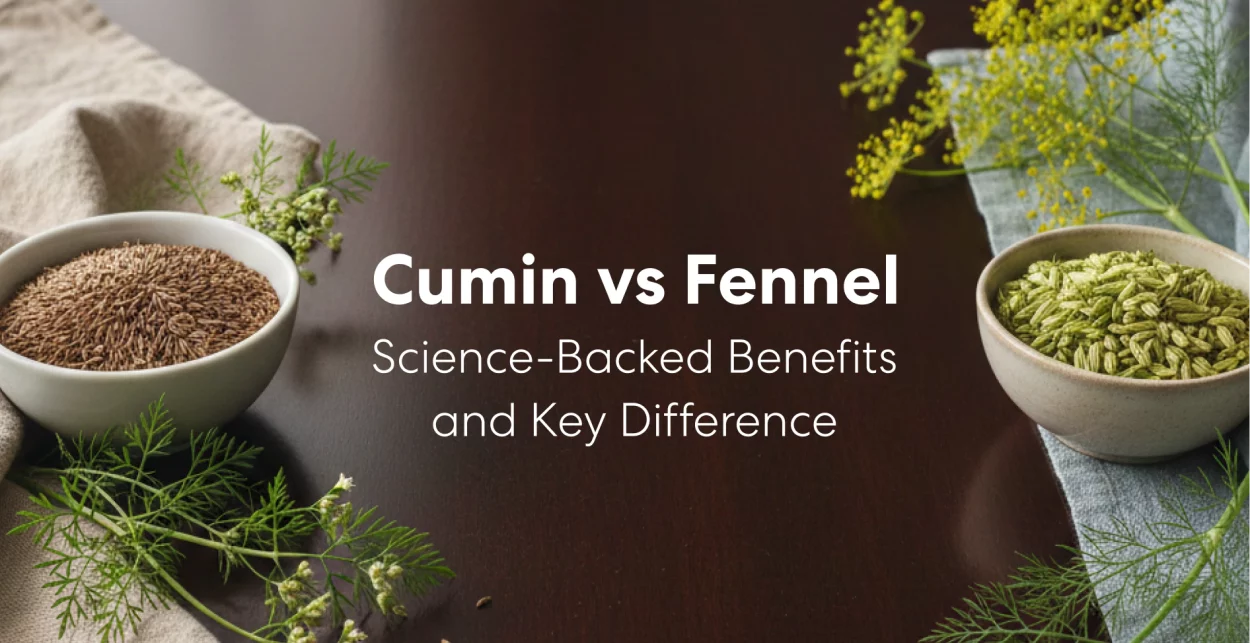
Cumin vs fennel, in short: cumin (jeera) is a warm, earthy spice that stimulates digestion and deepens the flavour of cooked food, while fennel (saunf) is sweet and soothing and is best for easing gas and bloating, often chewed after meals. Both are antioxidant-rich and have antimicrobial and anti-inflammatory properties. Here is how they compare, what each is best for, and how to use them.
Reviewed by Dr. Kamar Afshan, Clinical Nutritionist. Last updated: 9 June 2026.
Key takeaways: cumin vs fennel
- Cumin (jeera) = warm and earthy; stronger digestive stimulant, used cooked in food.
- Fennel (saunf) = sweet and mild; gentle on the gut, great for gas and bloating, chewed after meals.
- Both are rich in antioxidants and show antimicrobial and anti-inflammatory activity in studies.
- Fennel contains mild phytoestrogens – culinary amounts are safe; use high-dose extracts with caution.
- They work well together, which is why many Indian spice blends use both.
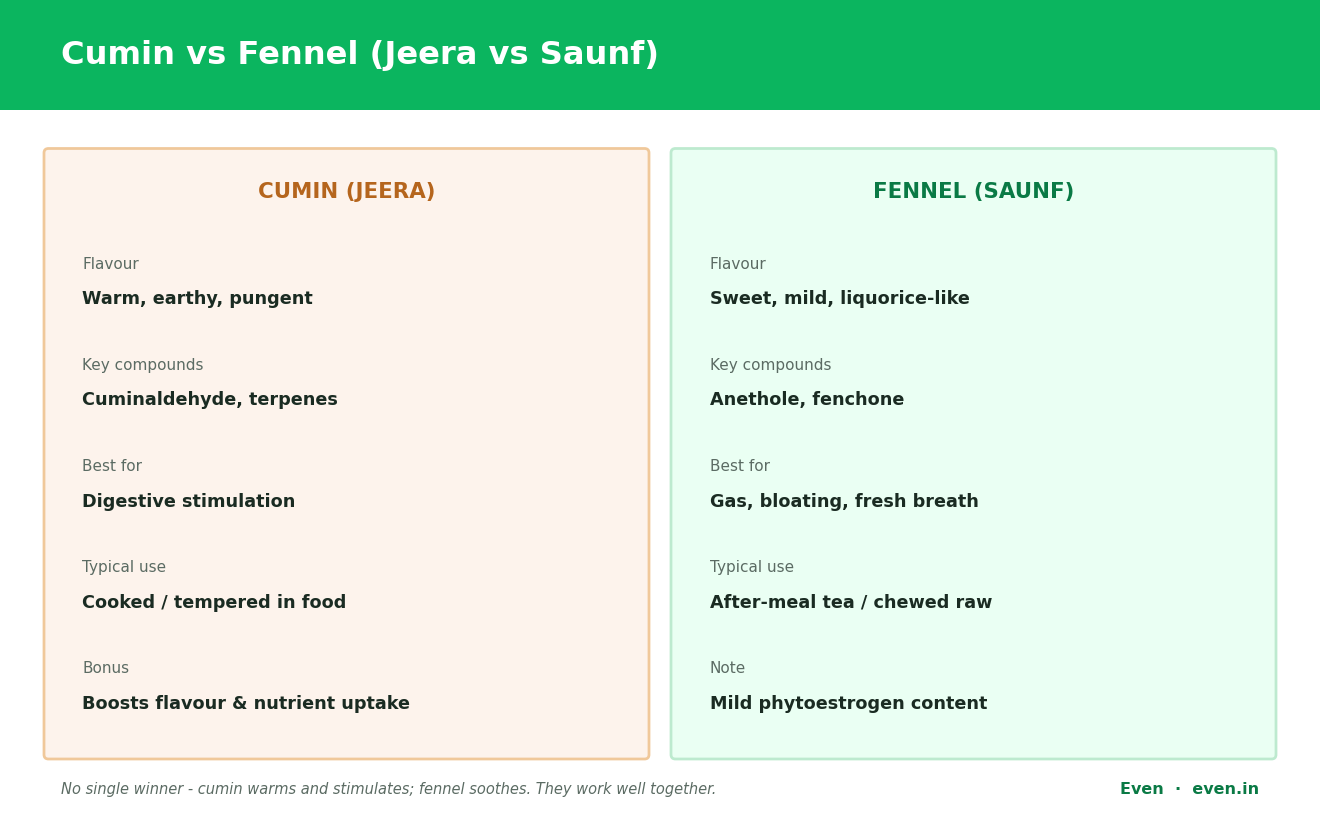
Cumin vs fennel: side-by-side comparison
| Feature | Cumin (jeera) | Fennel (saunf) |
|---|---|---|
| Flavour | Warm, earthy, pungent | Sweet, mild, liquorice-like |
| Key compounds | Cuminaldehyde, terpenes | Anethole, fenchone, estragole |
| Best for | Digestive stimulation, flavour, nutrient absorption | Gas, bloating, gentle digestion, fresh breath |
| Typical use | Tempered or cooked into dishes | After-meal tea or chewed raw |
| Note | Warming spice | Mild phytoestrogen content |
Shared health benefits
Antioxidant protection
Both seeds are packed with volatile oils, flavonoids and phenolic compounds that reduce oxidative stress. Fennel is high in anethole; cumin is rich in cuminaldehyde. For more antioxidant-rich foods, see mulberries.
Digestive support
This is where they differ most. Fennel gently relieves gas, cramps and bloating, which is why it is chewed after meals. Cumin gives stronger digestive stimulation and helps the body get more from food. Pair them with gut-friendly foods like red lentils and green moong dal.
Antimicrobial and anti-inflammatory activity
In lab studies, both spices inhibit certain bacteria and their volatile oils calm inflammatory pathways. This supports their traditional use, though these effects are preliminary and do not replace medical treatment.
Everyday nutrition
Both are nutrient-dense in small amounts, adding trace minerals and fibre. Fennel also has mild hormone-balancing (phytoestrogenic) effects.
Which should you use, and when?
- For gas, bloating or after a heavy meal: fennel (saunf) tea or a pinch of chewed seeds.
- For everyday cooking and richer flavour: cumin (jeera), tempered in oil or added to dishes.
- For a digestive blend: use both – they complement each other.
Myths vs facts
| Myth | Fact |
|---|---|
| Cumin or fennel can replace antibiotics | They show lab antimicrobial activity but cannot replace prescribed antibiotics |
| Fennel is unsafe because it acts like estrogen | Culinary amounts and teas are generally safe; only high-dose extracts need caution |
| Cumin burns fat fast | It may modestly support metabolism – it is not a fat-burning miracle |
| These spices have no side effects | In high doses, volatile oils can cause gastric irritation or allergic reactions |
Frequently Asked Questions
Cumin (jeera) is warm and earthy and stimulates digestion; fennel (saunf) is sweet and soothing and is best for gas and bloating, often chewed after meals.
Both help. Fennel is gentler and great for gas and bloating; cumin gives stronger digestive stimulation and is usually cooked into food.
Yes. They complement each other in cooking and in digestive blends – many Indian spice mixes use both.
Fennel may support digestion and reduce bloating and is low in calories, but it is not a fat-burner on its own.
Cumin may modestly support metabolism, but claims of rapid fat loss are overstated. It is a healthy addition, not a miracle.
Yes, in normal culinary amounts. High-dose extracts should be used cautiously, especially fennel due to its mild phytoestrogen content.
Cumin is jeera and fennel is saunf.
The bottom line
In the cumin vs fennel comparison there is no single winner – they do different jobs. Reach for fennel (saunf) to soothe gas and bloating, and cumin (jeera) to add warmth and digestive stimulation to cooked food. Used together in everyday culinary amounts, both are safe, antioxidant-rich additions to a balanced diet.
Related reading
- Health benefits of red lentils (masoor dal)
- Green moong dal: benefits, protein and nutrition
- Mulberry benefits and side effects
- Water apple (jamrul): benefits and side effects
- More from the Even Health blog
For persistent digestive issues it helps to get checked: gastroenterology care at Even Hospital in Bangalore, backed by health insurance with OPD cover.
References
- Comparative Study on Antioxidant Potential and Phytochemical Composition of Cumin and Fennel. (2014). Journal of Herbs, Spices & Medicinal Plants, 20(3).
- Malik, S., et al. (2019). A review on the therapeutic and nutritional value of spices. International Research Journal of Pharmacy.
- Korinek, M., et al. (2021). Fennel and cumin volatile oils inhibit neutrophilic inflammation via calcium and MAPKs. Frontiers in Pharmacology, 12, 674095.
- Allaithy, S. A. M. (2017). Cumin and fennel seed extracts against pathogenic bacteria. Iraq Medical Journal, 1(1).