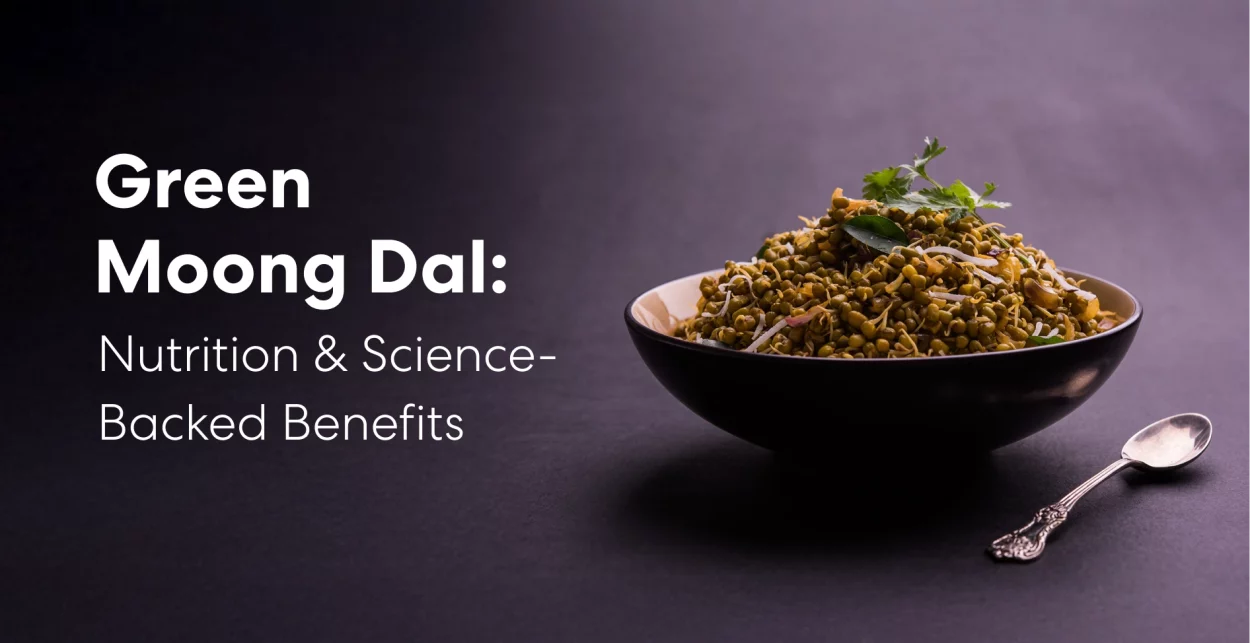
Green moong dal benefits, backed by research: this small green pulse (Vigna radiata) is one of the richest plant proteins in the Indian kitchen – about 24 g of protein per 100 g – and it helps steady blood sugar, lower cholesterol, and ease digestion. Here is what the science says, the full nutrition profile, and how to eat it.
Reviewed by Dr. Kamar Afshan, Clinical Nutritionist. Last updated: 9 June 2026.
Key takeaways: green moong dal benefits
- High plant protein: about 24 g per 100 g dry (roughly 14 g per cooked cup) – excellent for vegetarians and athletes.
- Steadies blood sugar: low glycaemic index plus fibre slows carbohydrate digestion.
- Heart-friendly: helps lower cholesterol and triglycerides.
- Easy to digest: soaking or sprouting for 6-8 hours cuts the phytic acid that causes gas.
- Antioxidant-rich: polyphenols like vitexin fight inflammation and oxidative stress.
Green moong dal nutrition (per 100 g, dry)
| Nutrient | Amount (per 100 g dry) |
|---|---|
| Protein | ~24 g |
| Carbohydrate | ~59-63 g |
| Dietary fibre | ~16 g |
| Calories | ~347 kcal |
| Key minerals | Iron, magnesium, potassium, folate |
| Glycaemic index | Low |
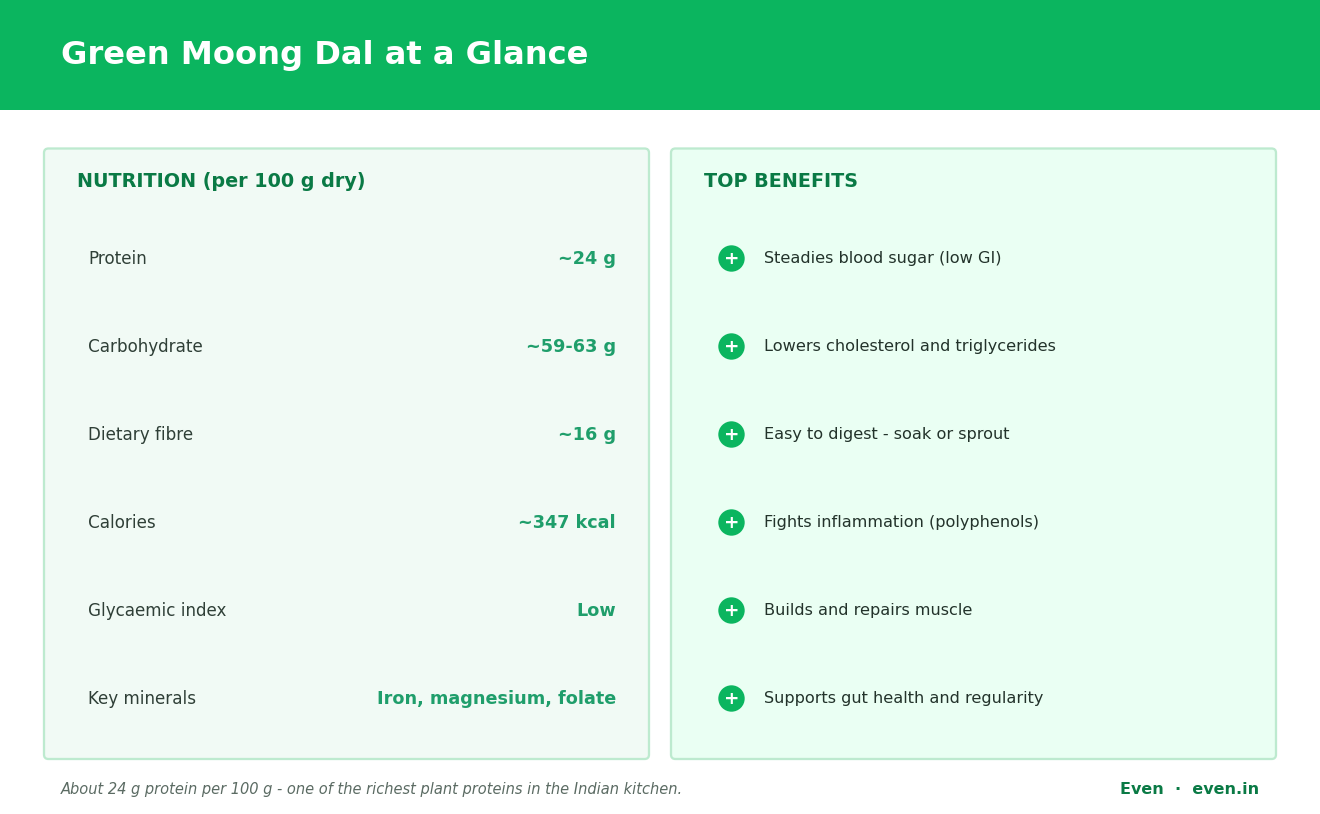
A cooked cup (about 200 g) provides roughly 14 g of protein – among the highest of any everyday Indian dal. Green moong dal is also rich in polyphenols such as vitexin and isovitexin, plus bioactive peptides that drive much of its antioxidant and anti-inflammatory effect.
Health benefits of green moong dal
1. Supports blood sugar control
Its high fibre and protein and low-GI carbohydrates slow digestion and blunt post-meal glucose spikes. Mung bean extracts can also inhibit carbohydrate-digesting enzymes, supporting insulin sensitivity – useful for people managing diabetes. Pairing it with other low-GI foods like oats helps further.
2. Improves heart and cholesterol health
Mung bean compounds reduce cholesterol, triglycerides and inflammation, lowering the risk of hypertension and high cholesterol. For more heart-friendly foods, see hazelnuts.
3. Antioxidant and anti-inflammatory protection
Polyphenols and peptides neutralise free radicals and lower inflammatory markers, protecting cells from oxidative damage.
4. Easy digestion and gut health
Green moong dal is gentler than most legumes. Soaking, sprouting and cooking until soft reduce phytic acid – the main cause of gas and bloating – while its fibre supports gut bacteria and relieves constipation. Another gentle, gut-friendly pulse is red lentils (masoor dal).
5. High-quality plant protein
Its peptides support muscle repair, immune function and metabolic health, making it a top protein choice for vegetarians and active people. Combine it with whole grains like brown rice or millet for a complete amino-acid profile.
How to eat green moong dal
- Forms: dal, soups, khichdi, salads, cheela/pancakes and sprouts.
- Soak or sprout 6-8 hours to boost nutrient absorption and reduce gas-causing antinutrients.
- Keep the skin on (whole green bean) for more polyphenols and fibre.
- Pair with whole grains (brown rice, millet) to complete the protein.
- Sensitive digestion? Use de-husked moong cooked until soft.
Frequently Asked Questions
About 24 g of protein per 100 g of dry green moong dal (roughly 14 g per cooked cup), making it one of the richest plant proteins in the Indian diet.
It can, due to fibre and phytic acid. Soaking or sprouting for 6-8 hours and cooking until soft greatly reduces gas and bloating.
About 59-63 g of carbohydrate per 100 g dry, but much of it is slow-digesting and comes with around 16 g of fibre, giving it a low glycaemic index.
Yes. Its high protein and fibre increase fullness and steady blood sugar, helping control appetite while staying relatively low in calories.
Yes. It has a low glycaemic index and slows carbohydrate digestion, helping reduce post-meal blood sugar spikes.
Sprouting boosts nutrient availability and lowers antinutrients, while cooked dal is gentler on digestion. Both are healthy – choose by preference and tolerance.
Yes. Daily moderate portions are safe and support protein intake, blood sugar and heart health. Pair it with whole grains for a complete amino-acid profile.
The bottom line
Green moong dal is a genuine everyday superfood: high-quality protein, plenty of fibre, low-GI carbs and strong antioxidants that support blood sugar, heart health, digestion and muscle recovery. Eaten regularly – soaked or sprouted for easy digestion – the green moong dal benefits add up to better long-term wellness. Explore more in our Health section.
For a plan built around your own health needs, Even pairs nutrition guidance with connected care, including follow-up through Even Hospitals.
Related reading
- Health benefits of red lentils (masoor dal)
- Oats: benefits, side effects and how to use
- Mozzarella cheese: benefits and nutrition
- Diabetes: what you need to know
- More from the Even Health blog
References
- Hou D, et al. (2019). Mung Bean (Vigna radiata L.): Bioactive Polyphenols, Polysaccharides, Peptides, and Health Benefits. Nutrients 11(6):1238.
- Rathore M, et al. (2023). Biochemical Evaluation of Moong Bean Characteristics for Nutraceutical Applications. Indian Journal of Agricultural Research 57(4):431-434.
- Swamy KRM (2023). Genetic Diversity and Breeding of Mung Bean (Vigna radiata). International Journal of Current Research.